

Ever Experienced a PSVT Episode?
Participate in Paroxysmal Supraventricular Tachycardia Clinical Trials Today!
Paroxysmal Supraventricular Tachycardia (PSVT) is a heart rhythm disorder that causes sudden episodes of rapid heartbeat. These episodes can start and stop abruptly, often leading to palpitations, dizziness, chest discomfort, fatigue, and shortness of breath. While episodes may be brief, they can significantly disrupt daily life and create ongoing anxiety about recurrence.
PSVT may develop due to abnormal electrical signals in the heart or underlying cardiovascular conditions. Over time, repeated episodes can strain both physical health and emotional well-being.
If you or someone you know is living with PSVT, Revival Research Institute is currently conducting clinical trials to explore potential new treatment options aimed at improving outcomes and quality of life.
Is this Clinical Trial the Right Fit for You?
The eligibility criteria to participate in the Paroxysmal Supraventricular Tachycardia Clinical Trials includes:
- Are 18 years or older
- Have been diagnosed with PSVT heart
- Have a history of paroxysmal supraventricular tachycardia episodes lasting for 20 minutes or more
*Additional Criteria may apply.
Participation in the Paroxysmal Supraventricular Tachycardia Clinical Trials is completely free. To learn more or see if you qualify, simply fill out the form below. A member of our research team will reach out to discuss your eligibility and guide you through the next steps.
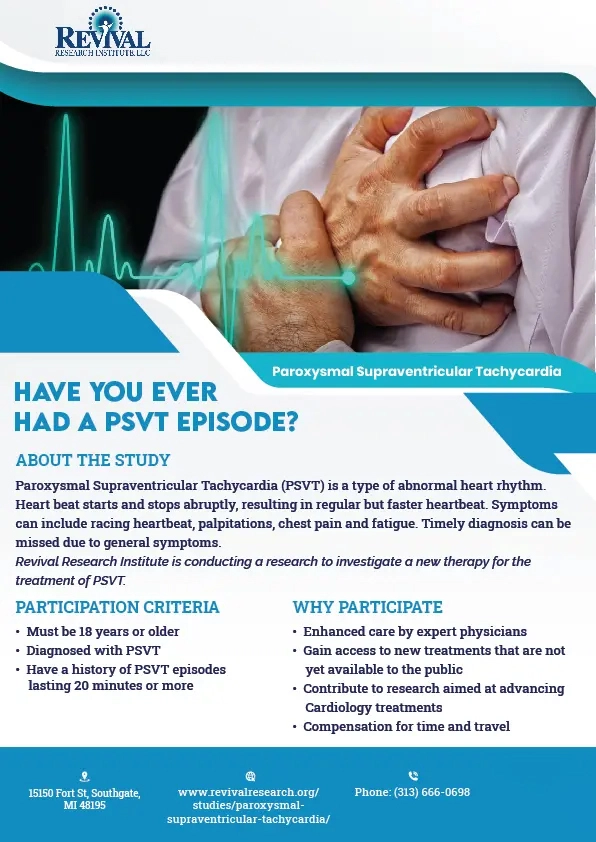
Paroxysmal Supraventricular Tachycardia Clinical Trials
Living with paroxysmal supraventricular tachycardia (PSVT) can significantly impact your daily life, causing sudden episodes of rapid heartbeat, palpitations, shortness of breath, dizziness, and fatigue. These recurring episodes can affect both physical and emotional well-being, making treatment and support essential.
Revival Research Institute is currently conducting a clinical trial to evaluate the safety and effectiveness of an investigational treatment for individuals diagnosed with PSVT. The goal of this study is to explore whether the treatment can help reduce episodes, improve heart rhythm control, and enhance overall quality of life.
The trial is being conducted at multiple research sites across the United States, including locations in Michigan and Texas. To participate, individuals will go through a screening process and must be willing to follow all study-related procedures. Eligible participants will be randomly assigned to receive either the investigational treatment or a placebo.
*All study-related care, procedures, and medication are provided at no cost. No insurance is required to participate, and eligible participants may also be compensated for their time and travel.
Get Started
What to Expect?
If you’re living with paroxysmal supraventricular tachycardia (PSVT), you may qualify for a paid clinical trial exploring new investigational treatment options. After submitting the interest form above, a member of our research team will contact you for a brief pre-screening to determine if you meet the initial eligibility criteria.
If you qualify, you’ll be asked to review and sign an Informed Consent Form (ICF), which outlines all study procedures, potential benefits, and possible risks. Once consent is provided, you will be invited to one of Revival’s sites in Michigan or Texas for a screening visit. During this visit, we’ll go over your medical history, conduct physical exams, and perform lab tests to confirm eligibility. Participants who meet all study requirements will be enrolled in the PSVT Clinical Trial.
Our team is dedicated to making sure you fully understand your role in the study and what to expect at each step. Feel free to ask questions at any time. Your participation plays an important role in helping us advance future treatment options for heart rhythm disorders like PSVT.

Age

Condition

Location
Understanding Paroxysmal Supraventricular Tachycardia

A normal heart rate is between 60 to 100 beats per minute (bpm), but an episode of Paroxysmal supraventricular tachycardia may increase it over 250 bpm. While having a PSVT heart is not life-threatening, symptoms may be alarming because of the unexpectedness of episodes combined with the rapid heart rate.
Some people experience significant anxiety and fear of the next episode. The episodes themselves may be debilitating and exhausting, leading some to avoid certain activities or withdraw from their normal routines.
PSVT May Be Caused By
- Extra electrical pathways in the heart (e.g., AV nodal reentry)
- Heart disease or structural abnormalities
- Stimulants (e.g., caffeine, nicotine, alcohol, drugs)
- Medications (e.g., digoxin, certain asthma meds)
- Stress or anxiety
- Electrolyte imbalances
Common Symptoms of PSVT
- Rapid pulse
- Chest pressure or pain
- Shortness of breath
- Anxiety
- Lightheadedness or dizziness
- Fainting
- Sudden onset of fatigue
Frequently Asked Questions
Your Guide to PSVT
Got questions about Paroxysmal Supraventricular Tachycardia?
We’ve compiled answers to some of the most common questions about the conditions, what causes it, and what daily life with PSVT can look like. Still can’t find what you’re looking for? Our team is here to help. Call us at +1 (248) 721-9539, and we’ll be happy to assist you.
What is paroxysmal supraventricular tachycardia?
PSVT is a heart condition in which the rhythm of the heart is abnormal. It develops due to issues in the electrical conductivity of the heart’s fibers. This results in rapid and sudden heartbeats that can leave one in discomfort. It is generally not life-threatening; however, it can cause heart pain (angina) or congestive heart failure.
Which is the most common abnormal heart rhythm in cases of sudden cardiac arrest in adults?
Arrhythmias like paroxysmal supraventricular tachycardia and ventricular fibrillation can cause sudden cases of cardiac arrest. This typically occurs due to improper conduction of electrical signals in the heart. This can lead to abnormal heartbeats.
Is PSVT dangerous?
In most cases, PSVT is not life-threatening, but it can be very uncomfortable and frightening due to the sudden rapid heartbeat. Rarely, if episodes are frequent or prolonged, they may weaken the heart over time.
Who can develop PSVT?
It can happen at any age, even to otherwise healthy people. However, it’s more likely in younger adults, people with a family history of arrhythmias, or those with structural heart conditions.
What should I do during an episode?
Some people can stop an episode by performing vagal maneuvers—like coughing, bearing down, or holding their breath. If symptoms persist, medical help may be required.