

Living with Type 1 Diabetes?
Discover a New Path to Wellness Through Clinical Trials
Type 1 diabetes (T1D) is an autoimmune condition in which the body’s immune system attacks insulin-producing beta cells in the pancreas, leading to lifelong dependency on insulin therapy. It often develops in childhood or adolescence but can be diagnosed in adults as well. Without adequate insulin regulation, people with T1D risk both immediate and long-term complications including elevated glucose levels, fatigue, and potential organ damage.
According to the Centers for Disease Control and Prevention, over 1.7 million Americans are living with type 1 diabetes, and its prevalence continues to rise among adults. Managing T1D requires careful balancing of insulin, diet, and lifestyle to avoid fluctuations that can significantly affect overall well-being.
If you or someone you know has type 1 diabetes, Revival Research Institute is conducting clinical trials to study potential treatment options aimed at improving glucose control and quality of life.
Are You Eligible to Participate?
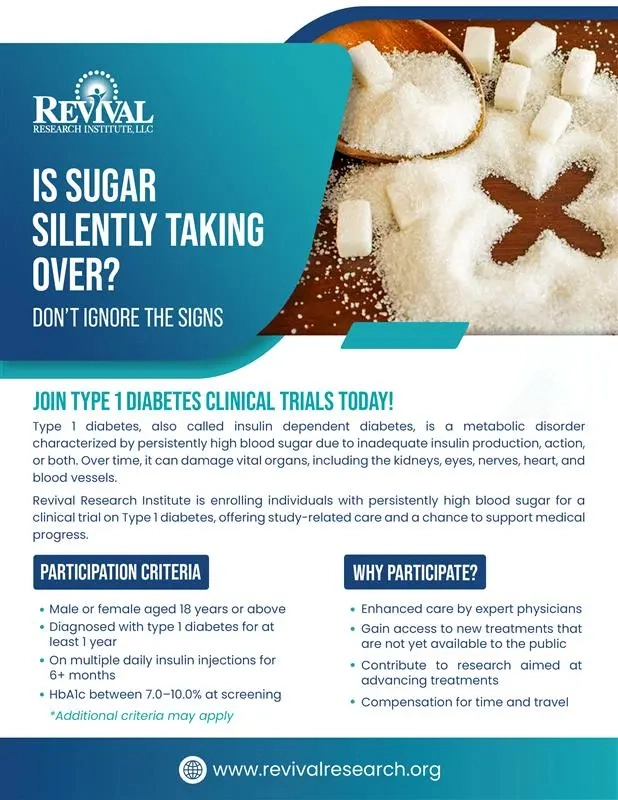
To be eligible for our Type 1 Diabetes Clinical Trials, individuals must meet the following criteria:
- Be 18 years or older
- Have a diagnosis of type 1 diabetes
*Additional criteria may apply.
Interested in participating? Please fill the form below and someone from our amazing research team will reach out to you for the next steps and to confirm your eligibility. Participants receive study-related care, monitoring, investigational treatment, and regular health assessments from experienced medical professionals.
About Type 1 Diabetes Clinical Trials
Living with type 1 diabetes can profoundly impact your daily routine. Constant monitoring of blood glucose levels, insulin administration, and managing diet and activity can become overwhelming and affect overall quality of life.
Revival Research Institute is conducting a clinical trial for individuals with type 1 diabetes. This research study is designed to evaluate the safety and effectiveness of an investigational treatment that may support better glucose control and reduce the daily burden of managing type 1 diabetes (T1D).
Type 1 Diabetes Clinical Trials will be conducted at select locations across the United States, including Texas. To determine study eligibility, all participants must complete a screening process and agree to follow study procedures. Those who qualify and are enrolled in the study will be randomly assigned to receive either investigational treatment or a placebo.
*All study procedures and study-related treatments, including the investigational drug, are provided at no cost, and no insurance is required to participate; and participants may receive compensation for time and travel.
*To take the next step, submit the form above, and our research staff will contact you to determine if you qualify for the study. A brief discussion about your health and medical history may be required.
Get Started
What to Expect?
If you are living with type 1 diabetes, you may qualify for a paid clinical trial exploring potential treatment options for better glucose control and symptom management. After submitting the interest form above, a member of our research team will reach out to conduct a brief pre-screening call to determine if you meet the initial eligibility criteria.
If you qualify, you will be asked to review and sign an Informed Consent Form (ICF), which outlines all study procedures, potential risks, and expected benefits. This ensures you have all the information you need before participating.
Following your consent, you will be invited to a screening visit to one of our clinical research sites. During this visit, we will review your medical history, conduct physical exams, and run lab tests to confirm eligibility. If you meet all study criteria, you will be officially enrolled in the clinical trial.
Our dedicated team will walk you through every step of the process. Please do not hesitate to ask questions; we are here to help you feel informed and comfortable. Your participation plays a key role in the future of type 1 diabetes treatment.

Age

Condition

Location
Struggling with Type 1 Diabetes?

Type 1 diabetes (T1D) is a chronic autoimmune condition in which the immune system mistakenly attacks and destroys the insulin-producing beta cells in the pancreas. This leads to little or no insulin production, resulting in elevated blood glucose levels. T1D often begins in childhood or adolescence, but it can develop at any age. Without proper management, it can cause serious complications affecting the heart, kidneys, eyes, and nerves.
Insulin therapy is essential for survival, but maintaining balanced glucose levels can be challenging. Even with modern tools, many patients face fluctuating sugars, hypoglycemia, and diabetes burnout. These hurdles impact quality of life and highlight the need for innovative treatment approaches that go beyond standard insulin replacement.
Type 1 Diabetes May Be Influenced By
- Genetic predisposition (family history of autoimmune conditions)
- Autoimmune responses (body attacking insulin-producing cells)
- Viral infections (potential immune system triggers)
- Environmental factors (early diet, toxins, or microbiome imbalance)
- Other autoimmune disorders (thyroid disease, celiac disease)
Common Symptoms of Type 1 Diabetes
- Frequent urination and excessive thirst
- Unintended weight loss despite normal or increased appetite
- Extreme fatigue and irritability
- Blurred vision or slow-healing wounds
- Increased susceptibility to infections
Frequently Asked Questions
Your Guide to Common Questions
We have answered some of the most commonly asked questions about type 1 diabetes, its symptoms, triggers, and everyday management, to help you feel more informed and supported. Are you looking for more guidance? Reach out to our amazing team: +1 (248) 721-9539
What is type 1 diabetes?
Type 1 diabetes (T1D) is a chronic autoimmune condition in which the body’s immune system mistakenly attacks and destroys the insulin-producing beta cells in the pancreas. As a result, the body can no longer produce insulin — the hormone responsible for helping glucose (sugar) enter cells for energy.
Without insulin, blood sugar levels rise dangerously high, which can lead to serious complications over time. Unlike Type 2 diabetes, which is often linked to lifestyle factors, Type 1 diabetes is not caused by diet or lifestyle and can develop in children, teens, or adults — often suddenly.
People with T1D must manually manage their blood sugar levels for life, typically through insulin therapy and continuous monitoring.
How is type 1 diabetes treated?
Treatment involves daily insulin (injections or pump), blood sugar monitoring (with a meter or CGM), balanced diet, and exercise. Some use advanced systems like automated insulin delivery. There is no cure, but research is ongoing.
Can you prevent type 1 diabetes?
Currently, there is no known way to prevent Type 1 diabetes. It is an autoimmune condition, meaning the body’s immune system mistakenly attacks the insulin-producing cells in the pancreas. Unlike Type 2 diabetes, it is not caused by lifestyle factors like diet or physical activity. Researchers are working to understand what triggers this immune response and are exploring treatments that may delay the onset in people who are at high risk — but as of now, there is no proven method to stop it from developing.
Is participation in the Type 1 Diabetes Clinical Trials free?
Yes, all medical visits, study procedures, and investigational treatments are provided at no cost. Compensation may be offered for time and travel.
Will the study treatment cure T1D?
There is currently no cure, but investigational therapies may improve blood glucose control, reduce daily disease burden, and slow progression.