

Living With the Challenges of Cold Induced Urticaria?
Discover a New Path to Wellness Through Cold Induced Urticaria Clinical Trials
Cold induced urticaria is a rare allergic condition where exposure to cold triggers itching, redness, swelling, or even severe reactions. For many reasons, daily life becomes unpredictable. Simple tasks like holding a cold drink or stepping outdoors can cause discomfort.
In severe cases, sudden drops in body temperature like swimming in cold water can lead to dizziness, fainting, or even life-threatening reactions. Managing this condition often requires avoiding sudden temperature changes and seeking medical guidance to prevent serious episodes.
Revival Research Institute is conducting cold induced urticaria clinical trials in Michigan to evaluate an investigational treatment that may help manage symptoms and improve quality of life. This cold urticaria clinical trial aims to explore whether innovative therapies can provide sustained relief from cold-triggered reactions.
Are You Eligible to Participate?
You may qualify for the cold urticaria clinical trial if you:
- Are 18 years of age or older
- Have been diagnosed with cold induced urticaria
*Additional criteria may apply.
Participation in cold induced urticaria clinical trials may provide access to expert medical care, study-related assessments, and investigational treatment for cold urticaria at no cost. Insurance is not required.
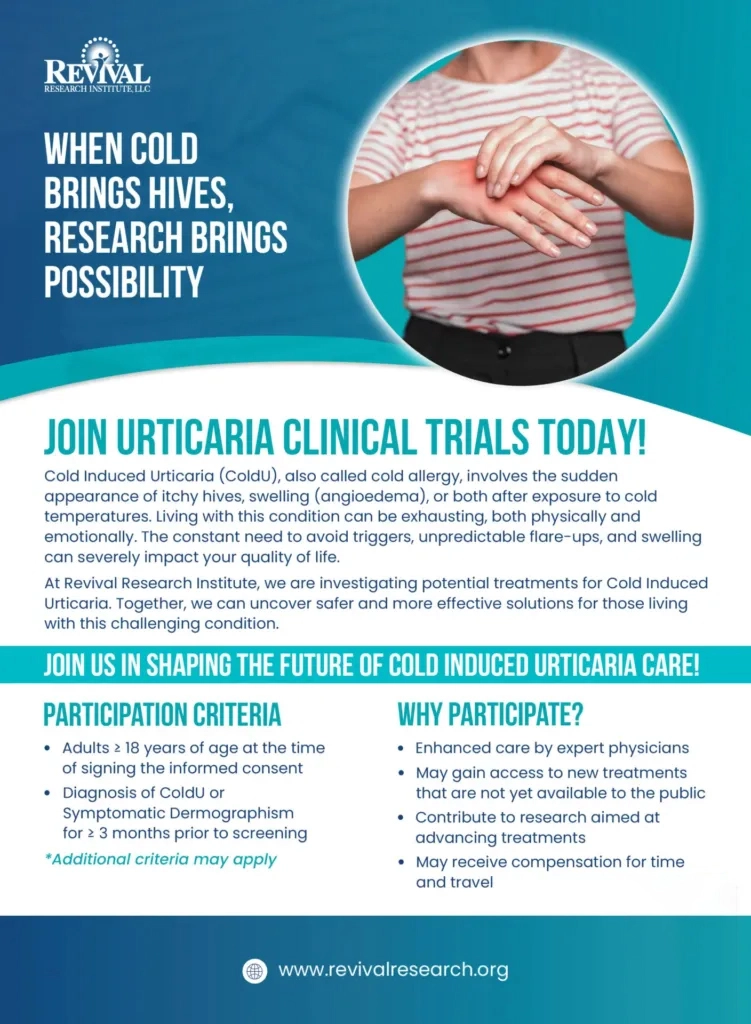
About the Cold Induced Urticaria Clinical Trials
Cold induced urticaria can cause sudden hives, redness, and swelling after exposure to cold temperatures. In severe cases, it may result in fainting or anaphylaxis. Current treatments focus mainly on symptom control, leaving many patients searching for better solutions.
Revival Research Institute is conducting a clinical research study to evaluate the safety and effectiveness of an investigational treatment for cold induced urticaria.
Cold Urticaria Clinical Trials will be conducted in several locations across the United States, including Michigan. To ensure study eligibility, all participants must comply with all study procedures. Participants who meet eligibility criteria during the screening phase and are selected to enroll will receive the assigned study intervention.
*All study-related care and investigational medications are provided at no cost. Participants will undergo regular health checkups and monitoring to ensure their safety throughout the study period. Compensation may be available for time and travel.
*To take the next step, submit the form above, and our research staff will contact you to determine if you qualify for the study. A brief discussion about your health and medical history may be required.
Get Started
What to Expect?
If you or someone you know is suffering from cold-induced urticaria, you may qualify for a clinical trial focused on investigating potential treatment options for this condition. After completing the interest form above, a research team member will contact you for a brief pre-screening to see if you meet the initial eligibility criteria. If you qualify, you will be asked to review and sign an Informed Consent Form (ICF), which explains all study procedures, potential benefits, and risks.
Following your consent, you’ll be invited to a screening visit at our clinical research site. During this initial visit, we will ask questions about your medical history, perform physical exams, and run lab tests to further assess your eligibility. If you meet all study requirements, you may be able to take part in the cold-induced urticaria clinical trial.
Our team will ensure you fully understand your role in the study and what to expect throughout the process. You are encouraged to ask questions before enrolling. Your participation will help advance new approaches to cold-induced urticaria therapies.

Age

Condition

Location
Understanding Cold Induced Urticaria

Discover New Possibilities Through Clinical Studies
Cold Induced Urticaria (CU) is a rare allergic skin condition that causes redness, swelling, and intensely itchy welts after exposure to cold temperatures. While it can occur at any age, it most commonly develops in young adults and may persist for several years. Symptoms often appear within minutes of exposure to cold air, water, or objects, and can range from mild itching to severe swelling or even systemic reactions like dizziness or shortness of breath in extreme cases.
Commonly affected areas include the hands, face, lips, and areas of skin exposed to sudden temperature changes. This condition goes beyond temporary discomfort; it can interfere with daily activities, limit outdoor exposure, and impact emotional well-being. Flare-ups may be triggered by swimming in cold water, cold weather, or consuming chilled foods and drinks. While antihistamines can help manage symptoms, individuals with cold induced urticaria often struggle to prevent recurrences and maintain consistent symptom control.
Common Symptoms Include
- Itchy, red hives after exposure to cold air or water
- Swelling of hands, lips, or eyelids
- Burning or tingling sensation
- Dizziness or fainting in severe cases
- In rare cases, whole-body allergic reactions
Risk Factors May Be
- Age 18 or older
- History of allergic or autoimmune conditions
- Family history of urticaria or cold sensitivity
- Prior anaphylactic reactions to cold exposure
Because cold urticaria can significantly affect quality of life, participating in cold induced urticaria clinical trials may provide early access to investigational treatment for cold urticaria and help advance safer, more effective therapies for the future.
Frequently Asked Questions
Your Guide to Cold Induced Urticaria
Got questions about Cold Induced Urticaria? You’re not alone.
We’ve compiled answers to some of the most common questions about the condition, what causes it, how it’s treated, and what daily life with eczema can look like. Still can’t find what you’re looking for? Our team is here to help. Reach out to us on +1 (248) 721-9539, and we’ll be happy to assist you.
What is cold induced urticaria?
It’s a skin condition where exposure to cold causes itchy hives or swelling. In some individuals, severe cold exposure can trigger more serious allergic reactions.
How is it treated currently?
Standard care includes avoiding cold triggers and using antihistamines, though many people continue to experience symptoms. That’s why cold urticaria clinical trial opportunities are exploring new ways to manage the disease.
Why should I consider joining a cold urticaria clinical trial?
By participating in a cold urticaria clinical trial, you may receive investigational treatment for cold urticaria, close medical supervision, and contribute to research that could benefit others struggling with this condition.