

Living with the Risk of Smoking Relapse?
Discover Hope Through Clinical Trials for Smoking Relapse in Adults
Quitting smoking is one of the most effective ways to improve health, lowering the risk of serious medical conditions both immediately and in the long term. Within minutes of quitting, heart rate and blood pressure begin to normalize as carbon monoxide levels in the blood drop to those of a nonsmoker, thus significantly reducing the risk of heart disease, stroke, and cancer. Despite these benefits, many smokers struggle with relapse.
Most people quit and restart several times before they are able to remain smoke-free for the long term. Research shows that relapse is most likely to happen within the first few weeks of quitting, and about 75% of individuals relapse within the first six months.
If you or someone you know wants support to prevent relapse, Revival Research Institute is conducting clinical trials for smoking relapse, investigating potential new treatment options.
Is this Clinical Trial the Right Fit for You?
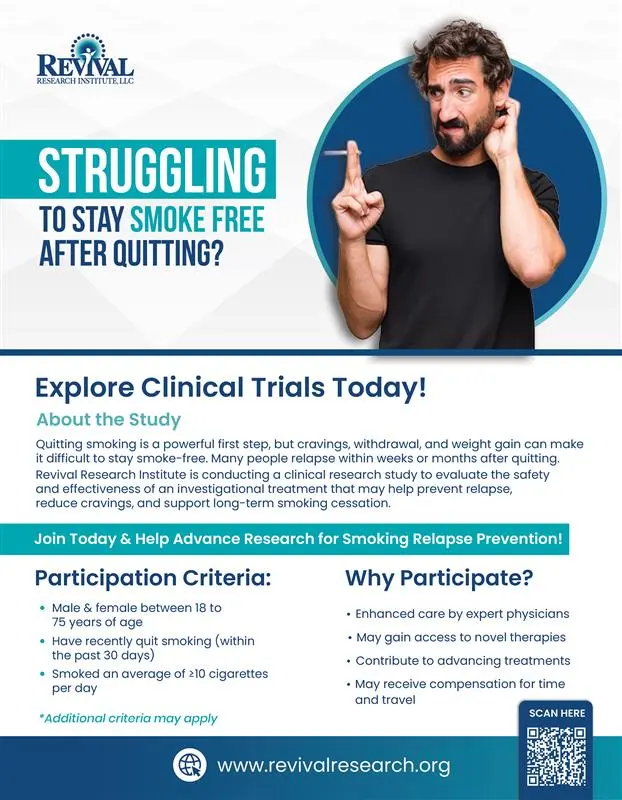
- Male & female between 18 to 75 years of age
- Have recently quit smoking (within the past 30 days)
- Smoked an average of more than 10 cigarettes per day
*Additional Criteria may apply.
About Clinical Trials for Smoking Relapse
Relapse after quitting smoking is common, with many individuals returning to cigarette use within weeks or months. The cycle of quitting and relapsing can take a toll on both physical health and emotional well-being as it can lower confidence, discourage future quit attempts, and increase health risks if not addressed.
Revival Research Institute is conducting a clinical trial to evaluate the safety and effectiveness of an investigational treatment for individuals who have recently quit smoking. The study aims to explore whether this treatment could potentially help reduce cravings and prevent relapse.
The trial is being conducted at multiple sites across the United States, including locations in Michigan. To participate, individuals must complete a screening process and agree to follow all study procedures. Eligible participants will be randomly assigned to receive either the investigational treatment or a placebo.
All study-related procedures and treatments are provided at no cost. No insurance is required to participate, and eligible participants may receive compensation for time and travel.
Get Started: What to Expect?
If you have recently quit smoking and want support to prevent relapse, they may qualify for a paid clinical trial exploring new treatment options. After submitting the interest form above, a member of our research team will contact you for a brief pre-screening to determine if you meet the initial eligibility criteria.
If you qualify, you’ll be asked to review and sign an Informed Consent Form (ICF), which outlines all study procedures, potential benefits, and possible risks. Once consent is given, you will be invited to one of Revival’s research sites in Michigan for a screening visit. During this visit, we’ll review your medical history, conduct physical exams, and perform lab tests to confirm your eligibility. Participants who meet all study requirements will be enrolled in the Clinical Trials for Smoking Relapse.
Our team is committed to ensuring you fully understand your role in the study and what to expect throughout. Please don’t hesitate to ask questions before making your decision. Your involvement helps advance future treatment options for smoking relapse prevention.

Age

Condition

Location
Understanding Smoking Relapse in Adults

Smoking relapse occurs when an individual who has quit smoking returns to tobacco use, often due to nicotine dependence, stress, or environmental triggers. Even after nicotine leaves the body, the brain continues to crave the familiar dopamine release associated with smoking. Environmental cues, emotional distress, or social settings can reignite the urge to smoke, leading many to slip back into old habits. This cycle of quitting and restarting not only makes it harder to stay smoke-free but can also cause frustration and feelings of failure, discouraging future attempts to quit.
The impact of smoking relapse extends beyond physical health, influencing emotional well-being and confidence. Many individuals experience guilt, anxiety, or a loss of motivation after a relapse, which can perpetuate stress and increase the likelihood of continued smoking.
Smoking Relapse Can Be Caused By
- Nicotine cravings
- Withdrawal symptoms
- Stress or environmental triggers
- Weight gain after quitting
- Behavioral and psychological factors
Common Signs & Symptoms of Smoking Relapse
- Intense urges to smoke
- Mood swings, irritability, or anxiety
- Difficulty focusing
- Returning to environments associated with smoking
Frequently Asked Questions (FAQs)
Your Guide to Smoking Relapse Prevention
Got questions about smoking relapse? You’re not alone.
We’ve compiled answers to some of the most common questions about why relapse happens, how it can be prevented, and what steps can help you stay smoke-free. Still can’t find what you’re looking for? Our team is here to help. Call us at +1 (248) 721-9539, and we’ll be happy to assist you.