

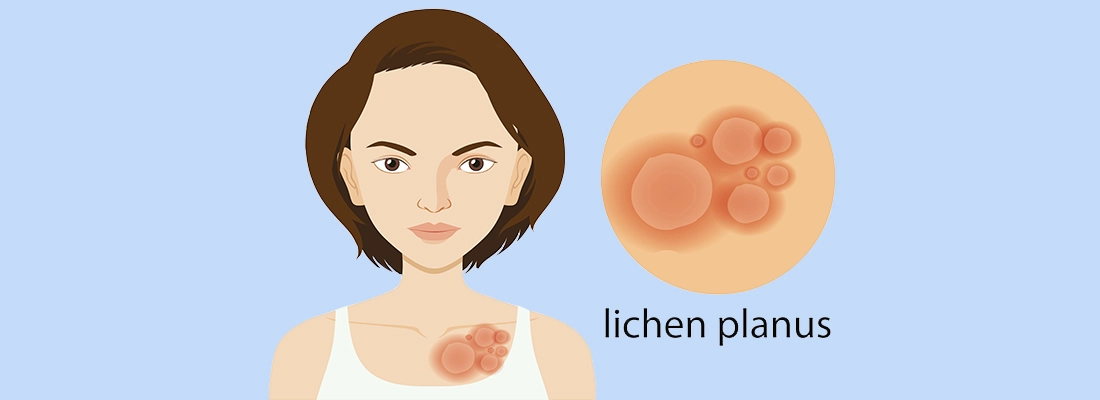
Lichen planus pigmentosus often appears as persistent dark patches that do not fade easily. In many cases, people notice changes in skin color before any other symptoms. Understanding how this condition presents, what may trigger it, and what treatment options exist can help with earlier recognition and informed care. If you or someone you know is suffering from this condition, consider enrolling in the Lichen Planus Clinical Trial being conducted across clinical research organizations in Michigan.
What Is Lichen Planus Pigmentosus?
Lichen planus pigmentosus (LPP) is a rare pigmentary disorder considered a variant of lichen planus. It primarily affects skin color rather than skin texture and presents as brown‑to‑gray or slate‑colored patches. These patches commonly develop on the face, neck, and other sun‑exposed areas.
The pigmentation occurs because melanin becomes deposited deeper in the skin rather than remaining in the upper layers. Although the exact cause is not fully understood, but doctors classify it as a variant of lichen planus with distinct pigmentation patterns rather than classic raised bumps or itching.
Unlike classic lichen planus, LPP usually does not cause raised lesions or significant itching. Many individuals experience little to no physical discomfort, but the visible discoloration can be cosmetically distressing.
What Does Lichen Planus Pigmentosus Look Like?
Lichen planus pigmentosus typically presents with the following skin changes:
- Flat patches ranging from dark brown to gray in color
- Poorly defined or irregular borders
- Gradual spread over time rather than sudden onset
- Common involvement of the face, neck, and sometimes the upper trunk
Less commonly, inverse patterns may appear in skin folds rather than sun‑exposed areas. In contrast to classic lichen planus, inflammation and itching are often mild or absent, which can delay diagnosis.
What Triggers Lichen Planus Pigmentosus?
The exact causes of lichen planus pigmentosus remain unclear, but research suggests several contributing factors:
- Sun exposure: Pigmentation often appears or worsens after prolonged sunlight exposure.
- Immune response: Abnormal immune activity affecting pigment‑producing cells is believed to play a central role.
- Contact substances: Certain oils, dyes, metals such as nickel, and topical irritants have been reported as potential triggers.
- Friction: Mechanical irritation from clothing or accessories may contribute, particularly in inverse forms of the condition.
Genetic susceptibility may influence risk, but many individuals develop LPP without a clearly identifiable trigger.
How is Lichen Planus Pigmentosus Diagnosed?
Diagnosis usually begins with a clinical evaluation by a dermatologist. The doctor will assess the pattern, distribution, and color of the pigmentation and review medical history, sun exposure, and potential contact triggers.
In some cases, a skin biopsy is performed to confirm the diagnosis and rule out other pigmentary conditions such as melasma or post‑inflammatory hyperpigmentation. Biopsy findings typically show melanin deposited deep within the skin along with a characteristic inflammatory pattern.
Options for Lichen Planus Pigmentosus Treatment
There is currently no universally effective cure for lichen planus pigmentosus. Treatment focuses on slowing progression, controlling inflammation, and reducing pigmentation where possible. Response to therapy varies between individuals.
Topical Treatments:
- Corticosteroid creams: Often used early to control inflammation
- Calcineurin inhibitors (such as tacrolimus): May be used when long‑term steroid use is not appropriate
Oral and Systemic Medications:
- Tranexamic acid: Used in some patients to reduce pigment formation
- Hydroxychloroquine or isotretinoin: Prescribed in selected cases with variable outcomes
- Immunosuppressive agents: Medications like cyclosporine or mycophenolate may be considered in more active disease
Light and Laser Therapies:
- Phototherapy: Certain UV‑based treatments have been tried, though results are mixed
- Laser treatments (such as Nd:YAG): Some patients experience improvement, but effectiveness is limited because pigment lies deep within the skin
Supportive Care:
- Daily use of broad‑spectrum sunscreen to prevent further darkening
- Avoidance of known irritants, friction, and harsh skincare products
Treatment plans are often individualized, and improvement tends to be gradual rather than rapid.
Who is Most Commonly Affected?
Lichen planus pigmentosus is reported more frequently in individuals with medium to darker skin tones, particularly among populations from South Asia, the Middle East, and parts of Latin America. It most often develops in adulthood, although cases have been documented across a wide age range. Both men and women can be affected, but some studies suggest a slightly higher prevalence among women.
Several factors may influence who develops LPP. Cumulative sun exposure, use of certain cosmetics or hair and skin oils, and individual immune sensitivity are thought to contribute. Because the condition is usually asymptomatic, many people may not seek medical attention early, leading to underdiagnosis or delayed diagnosis.
Conditions That Can Be Confused with Lichen Planus Pigmentosus
Lichen planus pigmentosus can resemble other causes of facial or body hyperpigmentation, making accurate diagnosis important. Conditions that may appear similar include:
- Melasma
- Post-inflammatory hyperpigmentation
- Drug-induced pigmentation
- Fixed drug eruptions
- Acanthosis nigricans in certain areas
Unlike melasma, LPP often has a gray or slate-like hue and less sharply defined borders. A dermatologist may recommend a biopsy when the diagnosis is uncertain, as management strategies differ significantly between these conditions.
Daily Skincare and Lifestyle Considerations
Medical treatment alone may not fully control lichen planus pigmentosus. Daily skincare habits and lifestyle choices play an important role in preventing progression and supporting treatment outcomes. Gentle skincare routines are recommended, including the use of mild, fragrance-free cleansers and moisturizers.
Sun protection is especially important. Broad-spectrum sunscreen should be applied daily, even during cloudy weather or when indoors near windows. Physical sun protection such as hats, scarves, or umbrellas can offer additional benefit. Avoiding harsh exfoliants, minimizing friction from clothing, and discontinuing products that cause irritation may help limit further pigmentation.
What to Expect Over Time
Lichen planus pigmentosus is typically persistent and slow to change. In some individuals, the condition stabilizes over months or years without further spread. Complete disappearance of pigmentation is uncommon, but gradual lightening may occur.
Key points to keep in mind include:
- Pigmentation may fade slowly and incompletely.
- Early treatment can improve cosmetic outcomes for some people.
- Regular follow‑up with a dermatologist helps adjust care as the condition evolves.
Conclusion
Lichen planus pigmentosus is a rare pigmentary condition that can significantly affect appearance but is usually not physically painful. While there is no quick cure, understanding the symptoms, possible triggers, and available treatment options allows for realistic expectations and informed decision‑making. If you notice persistent dark patches that match this description, consulting a dermatologist can help guide appropriate evaluation and long‑term management.