

Is Atherosclerotic Cardiovascular Disease Limiting You?
Explore New Possibilities Through Clinical Trials
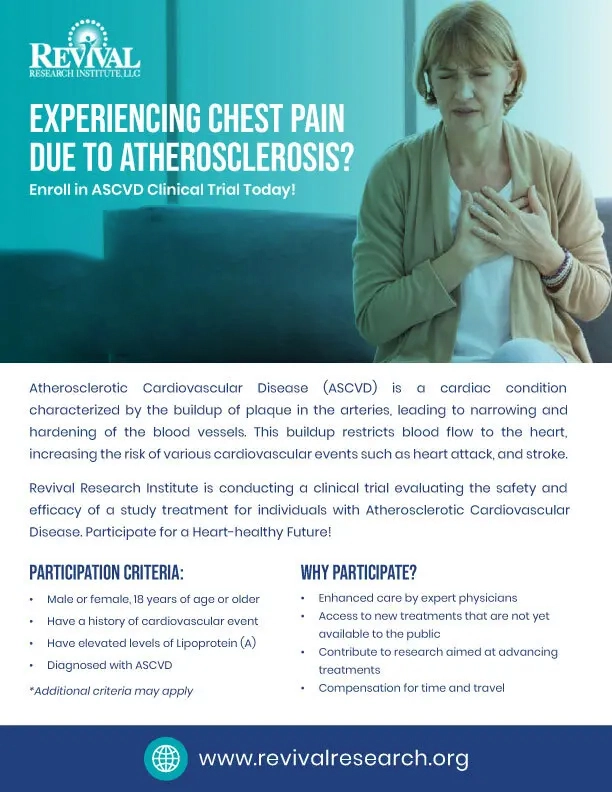
Atherosclerotic cardiovascular disease (ASCVD) is a serious condition caused by the buildup of plaque in the arteries, leading to narrowed or blocked blood vessels. This restricts blood flow and can result in chest pain, heart attacks, strokes, and other life-threatening complications.
Heart diseases including ASCVD are one of the leading causes of death for men and women in the United States. Despite advancements in medicine and treatments, there is still an unmet need for effective treatments that prevent and manage cardiovascular conditions. Lipoprotein(a), also known as Lp(a) carries cholesterol (a type of fat) in the blood. If you have high levels of Lp(a), you may have a higher risk of heart disease, heart attack, or stroke.
Revival Research Institute is conducting a clinical research study evaluating the safety and effectiveness of an investigational drug in lowering Lp(a) in blood.
Are You Eligible to Participate?
To be eligible for the Atherosclerotic Cardiovascular Disease Clinical Trials, individuals must meet the following criteria:
- Are 55 years or older, and have certain risk factors for heart disease or stroke
- Or are 18 years or older and already have heart disease or have had a stroke
- Have a high level of Lipoprotein(a) in your blood
*Additional criteria may apply.
This Atherosclerotic Cardiovascular Disease Research Study will have cardiologists and doctors gain a better understanding of the condition and observe whether the investigational medication helps lower “bad” cholesterol levels in the body that contribute to heart diseases.
*To learn more or see if you qualify, simply fill out the form below. A member of our research team will reach out to discuss your eligibility and guide you through the next steps.
Atherosclerotic Cardiovascular Disease Clinical Trials
Revival Research Institute, LLC is conducting a Cardiovascular Disease Research Study to observe the safety and effectiveness of a study drug that may be able to help lower Lp(a) and help people at risk for heart disease, including those with diabetes or kidney ailments, in hopes of creating a better future for heart health.
This clinical research study may be able to help people who have or are at risk for heart disease, stroke, or peripheral artery disease. The clinical trial is being conducted at multiple research sites across the United States, including locations in Michigan and Texas. To participate, individuals will go through a screening process and must be willing to follow all study-related procedures.
*All study-related care, procedures, and medication are provided at no cost. No insurance is required to participate, and eligible participants may also receive compensation for their time and travel.
Get Started
What to Expect?
If you’re living with Atherosclerotic Cardiovascular Disease (ASCVD), you may qualify for a paid clinical trial exploring new investigational treatment options. After submitting the interest form above, a member of our research team will contact you for a brief pre-screening to determine if you meet the initial eligibility criteria.
Once you agree to take part in the study, you will be asked to sign an Informed Consent Form that has all the details of the study. The study team will also be there to guide you about the process and your role in the study trials. We highly encourage all our participants to ask as many questions as they’d like before participating. In the end, the decision is all yours whether to take part or walk out of the trial.
Our team is dedicated to ensuring you fully understand your role in the study and what to expect at each step. You are encouraged to ask questions at any time. Your participation plays a vital role in advancing future treatment options for this serious cardiovascular condition.

Age

Condition

Location
The Link Between Atherosclerotic Cardiovascular Disease (ASCVD) and Lipoprotein(a) [Lp(a)]

Lipoprotein(a), or Lp(a), is a type of lipoprotein found in the blood. It’s similar to LDL cholesterol (“bad cholesterol”), but with an added protein called apolipoprotein(a), which makes it stickier and more inflammatory. This stickiness allows Lp(a) to contribute more directly to the buildup of plaque in the arteries, a condition known as atherosclerosis.
Atherosclerotic Cardiovascular Disease (ASCVD) is a serious and progressive condition that significantly impacts overall heart health. ASCVD occurs when plaque, composed of fat, cholesterol, and other substances, builds up in the arteries, leading to narrowed or blocked blood vessels. This restricts blood flow to the heart, brain, and other parts of the body, increasing the risk of heart attack, stroke, and other cardiovascular events.
High levels of Lp(a) are a genetic risk factor for atherosclerotic cardiovascular disease (ASCVD), meaning they are inherited and not significantly affected by diet or lifestyle. People with elevated Lp(a) and ASCVD are at higher risk of cardiovascular events, even if their other cholesterol levels are controlled.
What can Elevated Lp(a) Levels Do?
- Accelerate the formation of arterial plaque
- Promote inflammation and blood clotting
- Increase the risk of heart attacks, strokes, and narrowed arteries (especially in the heart and brain)
Common Symptoms of ASCVD
- Unusual heartbeat
- Pain in the chest, arms, jaw, and neck
- Shortness of breath
Frequently Asked Questions
Your Guide to Atherosclerotic Cardiovascular Disease
Got questions about Atherosclerotic Cardiovascular Disease (ASCVD)? You’re not alone.
We’ve compiled answers to some of the most common questions about ASCVD, what it is, what causes it, how it’s treated, and what daily life with atherosclerotic cardiovascular disease can look like. Still can’t find what you’re looking for? Our team is here to help. Call us at +1 (248) 721-9539, and we’ll be happy to assist you.
What is atherosclerotic cardiovascular disease (ASCVD)?
ASCVD is a condition caused by the buildup of plaque, made of cholesterol, fat, and other substances, inside the arteries. This buildup can narrow or block blood vessels, reducing blood flow to the heart, brain, and other organs, and increasing the risk of heart attack or stroke.
What are the common risk factors for ASCVD?
Key risk factors include high blood pressure, high cholesterol, smoking, diabetes, obesity, a sedentary lifestyle, and a family history of heart disease. Age and gender can also play a role.
What causes atherosclerotic calcification?
Atherosclerosis occurs due to the narrowing of the arteries in the heart. This develops due to the buildup of plaque deposits composed of cholesterol and fat in the heart. Atherosclerotic calcification is the hardening of these deposits, especially in the bigger arteries of the heart.
How is ASCVD diagnosed?
Doctors may use a combination of tests such as blood work, EKG, stress tests, CT scans, or angiography to assess heart function and detect any blockages or plaque buildup in the arteries.
Can ASCVD be prevented or reversed?
While ASCVD cannot always be fully reversed, it can often be prevented or slowed down through healthy lifestyle choices. Quitting smoking, maintaining a heart-healthy diet, exercising regularly, controlling blood pressure and cholesterol, and managing diabetes are key preventive measures. In some cases, medications and medical procedures can help reduce plaque buildup and restore better blood flow.