

Are Uncontrolled Chronic Hives Holding You Back?
Discover a New Path to Wellness Through Clinical Trials
Chronic Spontaneous Urticaria (CSU) is a long-term skin condition characterized by the sudden appearance of hives (wheals), swelling (angioedema), and intense itching that occurs without an identifiable trigger. These symptoms can persist for six weeks or more and significantly affect quality of life. CSU can occur at any age but is more common in adults, particularly women. Although the exact cause is unknown, it is believed to involve autoimmune responses, environmental factors, and histamine release from immune cells. Emotional stress and infections may also contribute to flare-ups.
According to the American College of Allergy, Asthma & Immunology (ACAAI), CSU affects approximately 1 in 100 people worldwide, often leading to sleep disturbances, daily discomfort, and emotional strain due to its unpredictable nature (ACAAI CSU Overview). In individuals with CSU, the immune system may mistakenly attack healthy tissues, resulting in persistent inflammation and hypersensitive skin reactions.
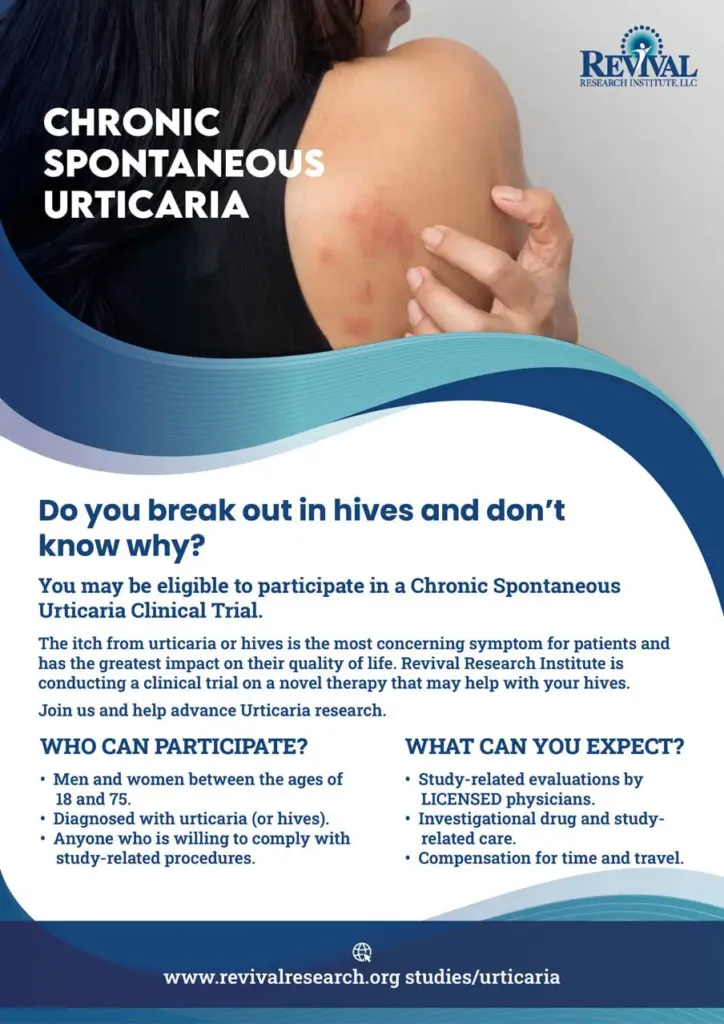
If you or someone you know is struggling with spontaneous and itchy hives, Revival Research Institute is conducting Chronic Spontaneous Urticaria Clinical Trials, exploring potential new treatment options.
Are You Eligible to Participate?
To be eligible to participate in Chronic Spontaneous Urticaria clinical trials, individuals must meet the following criteria:
- Are 18 years or older
- Diagnosed with Chronic Spontaneous Urticaria (Chronic Hives)
- Have had itches and wheals for 8 consecutive weeks, despite anti-allergy treatments
*Additional criteria may apply.
Participation in Chronic Spontaneous Urticaria Clinical Trials provides a chance to receive expert care, free study-related medication, and regular health monitoring by experienced medical professionals.
Expert Dermatology Care, Centered on You
Living with Chronic Spontaneous Urticaria (CSU) can significantly impact one’s quality of life. It may cause recurring hives, intense itching, and swelling that appear without warning.
Revival Research Institute is currently enrolling in Chronic Spontaneous Urticaria Clinical Trials to evaluate an experimental drug for chronic hives and itching. If you qualify for the research study and decide to participate, you might either receive the study drug or a placebo. The study doctor will explain when, how often, and how the study drug will be given to you.
*All study procedures and study-related treatments, including the investigational drug, are provided at no cost, and no insurance is required to participate; and participants may receive compensation for time and travel.
*To take the next step, submit the form above, and our research staff will contact you to determine if you qualify for the study.
Get Started
What to Expect?
One you decide to fill out the form above, someone from our research team will reach out to you. Part of the screening process will take place over the phone call, and the rest will be completed once we invite you to the study site, if you qualify.
The study physician will explain the study treatments available to you and perform certain tests, including blood tests, ECG, and biomarker analysis for the research study while safeguarding your information as per ethical standards. You will receive complete study-related care, including study-related treatments and tests from professional and experienced healthcare staff, including doctors and nurses.
Volunteers who qualify for the research study will be asked to sign an informed consent document after everything about the study, including the study treatment, optional treatments, and risks and benefits, have been explained by the study doctor.

Age
18 years or older

Condition
Chronic Spontaneous Urticaria

Location
Michigan
About Chronic Spontaneous Urticaria

Chronic Urticaria or Uncontrollable Hives is the daily or episodic appearance of wheals and swelling within the deeper layers of the skin (angioedema), without any cause. Deep tissue swelling occurs in about 40% of the patients with chronic hives. It is mostly unpredictable, and swelling can occur anywhere on the body or in the upper respiratory tract. Swelling of the face, lips, or airway is particularly uncomfortable and can be profoundly serious. In about 75% of hives cases, the causes are unknown.
Chronic Spontaneous Urticaria May Be Triggered By
- Autoimmune responses (body attacking its own skin cells)
- Stress and emotional factors
- Viral or bacterial infections
- Hormonal fluctuations (e.g., during menstruation or thyroid dysfunction)
- Physical stimuli (such as pressure, heat, or friction)
- Certain medications (NSAIDs, antibiotics, etc.)
Common Symptoms of Chronic Spontaneous Urticaria -
- Red, raised hives (wheals) that appear and fade unpredictably
- Intense itching, often worse at night
- Swelling of the lips, eyelids, hands, or feet (angioedema)
- Skin reactions lasting longer than six weeks without a known cause
- Daily or near-daily flare-ups affecting sleep and daily life
- Burning or stinging sensation in affected areas
Frequently Asked Questions (FAQs)
Your Guide to Common Questions
Look at some of our most frequently asked questions about chronic hives and what they may be all about. Cannot find the answer you are looking for? call us at: +1 248-721-9539
What is Chronic spontaneous urticaria?
Urticaria is the medical term for hives. In this condition, you see itchy, raised bumps or welts on your skin. When the condition lasts for more than 6 weeks and there are no known causes for it, it is considered chronic spontaneous urticaria (hives). In about 75% of chronic hives cases, the causes are unknown.
How do I treat chronic urticaria?
The first line of chronic urticaria treatment mostly includes over-the-counter antihistamines. You can treat the itchiness by holding an ice pack to the area. Severe cases of hives will require a prescription of other medications like H2 blockers, immune suppressants, or oral corticosteroids from a doctor.
Will I have to pay to participate in the Hives Clinical Trial? -
Participating in the Chronic Spontaneous Urticaria Clinical Trials is free of cost to both you and your private insurance. If you qualify and decide to participate in the research study, you will be compensated for your time and travel expenses.
What can I do to reduce my symptoms of chronic hives?
Try to avoid common allergic foods like nuts, eggs, shellfish, and foods that contain additives and artificial flavors. Medications like aspirin and NSAIDs can also aggravate your hives. Pay attention to some of the triggers that may cause hives and try to avoid them. Take cool oatmeal baths and use ice packs – this is known to reduce the swelling and inflammation due to hives.
Will the study drug cure me of Chronic Hives?
The study drug is not a cure for chronic hives, but it may help reduce symptoms and improve overall quality of life. Revival Research Institute is conducting Chronic Spontaneous Urticaria Clinical Trials to evaluate an investigational treatment that may provide relief for individuals living with this condition.