

Managing Diabetic Kidney Disease Feels Overwhelming?
A Kidney Research Study May Help You Protect Your Kidney Health
Living with diabetic kidney disease can be exhausting, especially when lab results continue to worsen despite your best efforts to control blood glucose and follow treatment plans. Many people struggle with fatigue, medication overload, and the stress of watching kidney function slowly decline.
Managing kidney health with diabetes is not easy, but ongoing research is exploring new approaches designed to better understand and target the biological drivers of kidney damage, with the goal of slowing progression and supporting long-term kidney health.
If you or someone you know is living with diabetes, Revival Research Institute is conducting diabetic kidney disease clinical trials to evaluate innovative treatments that may support better blood glucose & kidney management.
Is this Clinical Trial the Right Fit for You?
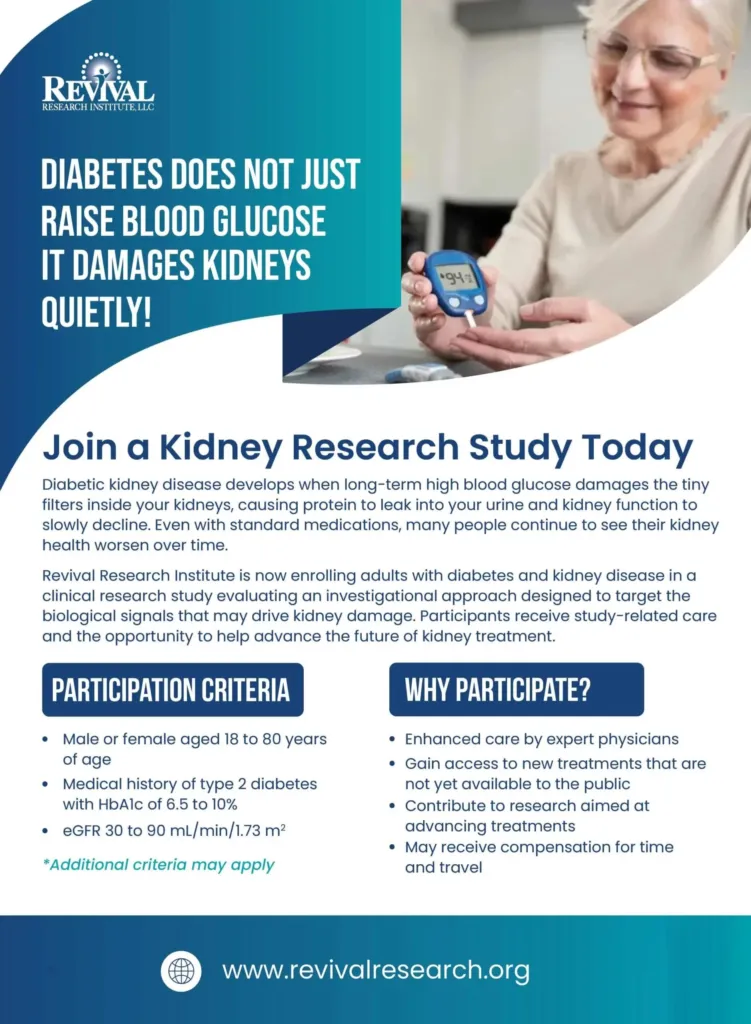
To participate in for diabetic kidney disease clinical trial in Texas, individuals must meet the following criteria:
- Male or female aged 18 to 80 years of age
- Medical history of type 2 diabetes with HbA1c of 6.5 to 10%
- eGFR 30 to 90 mL/min/1.73 m2
*Additional criteria may apply.
Participation in diabetic kidney disease clinical trial is free of cost. To learn more or enroll, fill out the form below, and someone from our research team will contact you to discuss your potential eligibility for the study.
About Diabetic Kidney Disease Clinical Trial
Diabetic kidney disease develops when long-term high blood glucose damages the kidneys’ filtering system, causing protein to leak into the urine and kidney function to slowly decline. Over time, this damage can affect overall health and significantly impact daily life.
Revival Research Institute is conducting a nephrology clinical trial to evaluate the safety and effectiveness of an investigational insulin management system. The goal of the study is to better understand and target the biological drivers of kidney damage in people with diabetes, with the aim of supporting kidney health and slowing disease progression.
The trial is being conducted at multiple sites across the United States, including locations in Texas. To participate, individuals must complete a screening process and agree to follow all study procedures. Eligible participants will be randomly assigned to receive the investigational treatment.
All study-related procedures and treatments are provided at no cost. No insurance is required to participate, and eligible participants may receive compensation for time and travel.
Get Started
What to Expect?
If you are living with diabetes with kidney damage and are interested in participating in a clinical trial, you may qualify for a paid clinical trial exploring new treatment options. After submitting the interest form above, a member of our research team will contact you for a brief pre-screening to determine if you meet the initial eligibility criteria.
If you qualify, you’ll be asked to review and sign an Informed Consent Form (ICF), which outlines all study procedures, potential benefits, and possible risks. Once consent is given, you will be invited to one of Revival’s research sites in Texas for a screening visit. During this visit, we’ll review your medical history, conduct physical exams, and perform lab tests to confirm your eligibility. Participants who meet all study requirements will be enrolled in the clinical trial.
Our team is committed to ensuring you fully understand your role in the study and what to expect throughout. Please don’t hesitate to ask questions before making your decision.

Age
18 to 80 years of age

Condition
Diabetic Kidney Disease Clinical Trial

Location
Texas
Protecting Kidney Health

Diabetic kidney disease develops when long-term high blood glucose damages the kidneys’ delicate filtering system, allowing protein to leak into the urine and reducing the kidneys’ ability to remove waste from the body. This damage often happens quietly, without obvious symptoms at first.
Even with standard treatments, many people continue to see their kidney health decline over time. Worsening lab results, fatigue, and the emotional weight of watching kidney function change can affect daily life and overall well-being.
Ongoing clinical research plays an important role in understanding how diabetic kidney disease progresses and in exploring new approaches designed to target the biological signals that drive kidney damage, with the goal of supporting kidney health and slowing progression.
Common Causes and Triggers of Diabetic Kidney Disease
- Family history of diabetes or kidney problems
- Poor blood glucose control and frequent high glucose levels
- Unhealthy eating habits
- Lack of physical activity
- Obesity or excess body weight
- Ongoing stress and hormonal imbalances
Common Signs & Symptoms of Diabetic Kidney Disease
- Swelling in the body
- Foamy urine
- Persistent fatigue
- Changes in urination
- Trouble concentrating
Frequently Asked Questions
Your Guide to Diabetic Kidney Disease Clinical Trials
We’ve compiled answers to some of the most common questions about diabetic kidney disease and its management. Still can’t find what you’re looking for? Our team is here to help. Call us at +1 (248) 721-9539, and we’ll be happy to assist you.
What is Diabetic Kidney Disease?
It’s a condition where long-term high blood glucose damages the kidneys’ filters, leading to protein leakage in urine and reduced kidney function.
Who is at risk?
People with type 1 or type 2 diabetes, especially those with uncontrolled blood glucose, high blood pressure, or a family history of kidney disease.
What are the early symptoms?
Early stages often have no symptoms. As it progresses, signs may include swelling in the hands, feet, or face, fatigue, and changes in urination.
Can it progress to kidney failure?
Yes, if not managed early, DKD can progress to chronic kidney disease or kidney failure. Early detection and intervention are crucial.
Are there clinical trials for Diabetic Kidney Disease?
Yes, clinical trials explore new treatments and ways to slow progression. Participating can provide access to cutting-edge therapies under medical supervision.