

Is Graves’ Disease Becoming Hard to Manage?
Discover Hope Through Graves’ Disease Clinical Trials in Adults
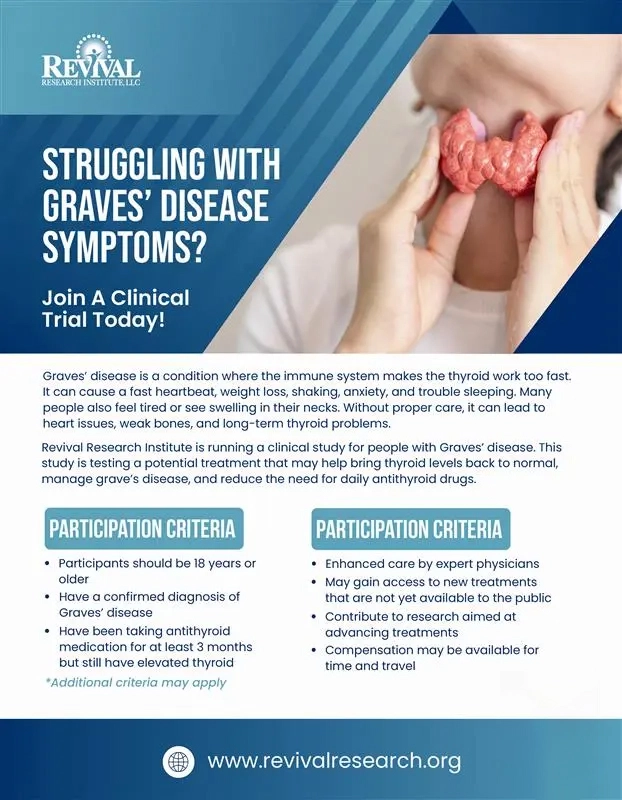
Graves’ disease is an autoimmune condition that causes the thyroid gland to become overactive. This can lead to symptoms such as rapid heartbeat, weight loss, anxiety, tremors, heat intolerance, and fatigue. While treatments are available, many individuals continue to experience symptoms or side effects that impact daily life.
Managing Graves’ disease can feel overwhelming, especially when symptoms return or remain difficult to control. Ongoing Graves’ disease research study plays an important role in advancing care and exploring new treatment approaches that may help improve thyroid balance and overall well-being.
If you or someone you know is living with Graves’ disease, Revival Research Institute is conducting clinical trials to evaluate investigational treatment for graves disease.
Is this Clinical Trial the Right Fit for You?
- Participants should be 18 years or older
- Have a confirmed diagnosis of Graves’ disease
- Have been taking antithyroid medication for at least 3 months but still have elevated thyroid hormone levels
*Additional criteria may apply.
About Clinical Trials for Graves' Disease
Graves’ disease occurs when the immune system mistakenly attacks the thyroid gland, causing it to produce too much thyroid hormone. Over time, uncontrolled thyroid levels can affect the heart, bones, eyes, and overall quality of life.
Revival Research Institute is conducting a Graves’ Disease clinical trials in Texas to evaluate the safety and effectiveness of an investigational treatment for individuals having Graves’ Disease. The goal of the study is to better manage thyroid hormone levels and reduce disease-related symptoms.
The trial is being conducted at multiple sites across the United States, including locations in Texas. To participate, individuals must complete a screening process and agree to follow all study procedures. Eligible participants will be randomly assigned to receive either the investigational treatment or a placebo.
*All study-related procedures and treatments are provided at no cost. No insurance is required to participate, and eligible participants may receive compensation for time and travel.
Get Started
What to Expect?
If you are living with Graves’ disease and are interested in participating in a clinical trial, you may qualify for a paid clinical trial exploring new treatment options. After submitting the interest form above, a member of our research team will contact you for a brief pre-screening to determine if you meet the initial eligibility criteria.
If you qualify, you’ll be asked to review and sign an Informed Consent Form (ICF), which outlines all study procedures, potential benefits, and possible risks. Once consent is given, you will be invited to one of Revival’s research sites in Texas for a screening visit. During this visit, we’ll review your medical history, conduct physical exams, and perform lab tests to confirm your eligibility. Participants who meet all study requirements will be enrolled in the Clinical Trials for Graves’ Disease.
Our team is committed to ensuring you fully understand your role in the study and what to expect throughout. Please don’t hesitate to ask questions before making your decision.

Age

Condition

Location
Understanding Graves’ Disease in Adults

Graves’ disease happens when the body’s immune system sends signals that cause the thyroid to work too hard. As a result, the thyroid releases more hormones than the body needs, which can speed up many normal body functions.
Even when treatment is started, symptoms may come and go. These changes can affect energy levels, mood, and everyday activities. In some cases, Graves’ disease can also affect the eyes, leading to dryness, puffiness, discomfort, or changes in vision.
Ongoing Graves’ Disease clinical trials play an important role in learning more about how Graves’ disease behaves and why symptoms vary from person to person. This research helps to explore new approaches that may better manage symptoms and support long-term thyroid health.
Common Causes and Triggers of Graves’ Disease
- Autoimmune response
- Genetic predisposition
- Stress
- Hormonal changes
- Smoking
Common Signs & Symptoms
- Rapid or irregular heartbeat
- Weight loss despite normal appetite
- Anxiety or irritability
- Tremors in hands or fingers
- Heat intolerance and sweating
- Fatigue or muscle weakness
Frequently Asked Questions (FAQs)
Your Guide to Graves’ Disease Clinical Trials
Got questions about Graves’ Disease? You’re not alone.
We’ve compiled answers to some of the most common questions about Graves’ Disease and its management. Still can’t find what you’re looking for? Our team is here to help. Call us at +1 (248) 721-9539, and we’ll be happy to assist you.
What is Graves’ disease?
Graves’ disease is an autoimmune condition that causes the thyroid gland to produce too much thyroid hormone, leading to hyperthyroidism.