

Are Those Painful Bumps Bothering You?
Hidradenitis Suppurativa Clinical Trials May Be the Right Choice for You!
Hidradenitis suppurativa (HS) is a chronic, painful, and often misunderstood skin condition caused by inflammation and blockage of hair follicles, typically in areas where skin rubs together such as the armpits, groin, inner thighs, buttocks, and under the breasts. It begins with small, tender bumps under the skin that can become inflamed, rupture, and drain pus. Over time, these lesions may heal with scarring or develop into deep tunnels under the skin called sinus tracts.
Recent research has found that the overall prevalence of hidradenitis suppurativa is around 0.40% in the US, which means about 1 in 250 people have this condition.
If you or someone you know has hidradenitis suppurativa, Revival Research Institute is conducting Hidradenitis Suppurativa Clinical Trials in Georgia and Michigan, exploring potential treatment options.
To participate in the Hidradenitis Suppurativa Clinical Trials, you must:
- Be above the age of 18 years
- Have been diagnosed with moderate to severe HS
*Additional criteria may apply.
*Participation in the Hidradenitis Suppurativa Clinical Trials is free of cost. To learn more or to enroll, fill out the form below, and someone from the research team will contact you to discuss whether you may be eligible to participate in the study.
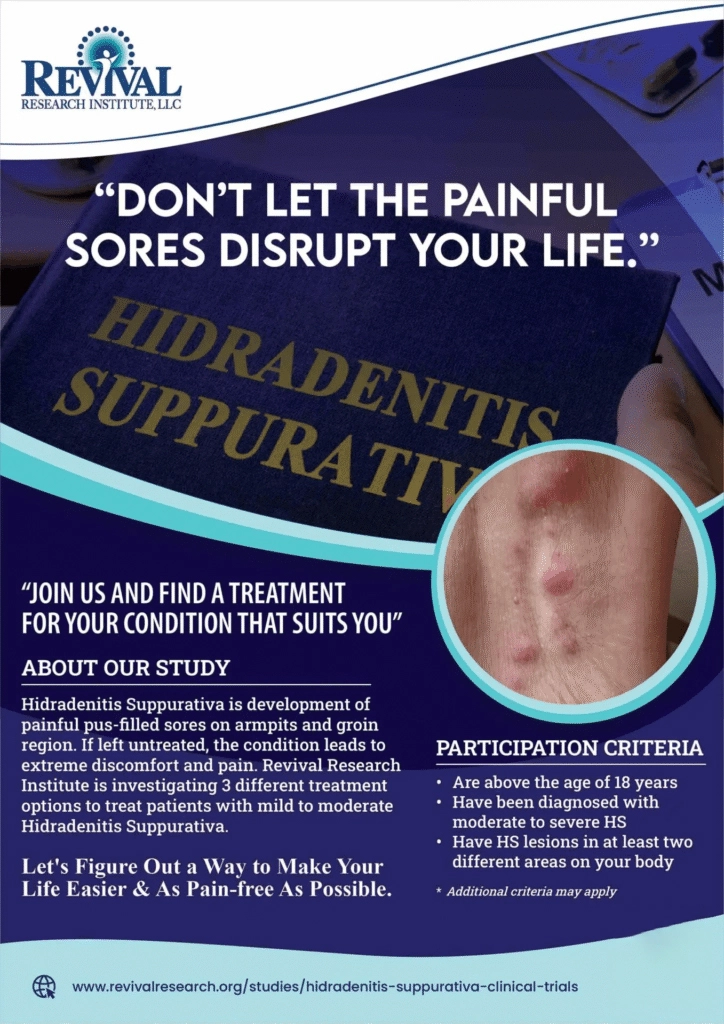
About the Hidradenitis Suppurativa Clinical Trials
Living with HS can be both physically painful and emotionally overwhelming. The recurring bumps, abscesses, and discomfort can interfere with daily activities, limit mobility, and impact your overall quality of life.
Revival Research Institute is conducting a clinical trial for individuals with moderate to severe hidradenitis suppurativa. This research study aims to evaluate the safety and effectiveness of an investigational treatment that may help reduce inflammation, pain, and other symptoms associated with HS.
Hidradenitis Suppurativa Clinical Trials are taking place at multiple locations across the United States, including Georgia and Michigan. To determine eligibility, all participants will need to complete a screening process and agree to follow all study procedures. Eligible individuals who qualify for the trial may receive either the investigational treatment or a placebo.
*No insurance is required to participate. Participants will receive study-related care completely free of cost.
* To get started, simply fill out the form above. A member of our research team will reach out to you for a brief screening call, where they’ll ask a few questions about your health and medical history to determine if you may qualify for the study.
Get Started: What to Expect?
If you are living with hidradenitis suppurativa, you may qualify for a paid clinical trial focused on investigating potential treatment options for skin conditions like hidradenitis suppurativa. After completing the interest form above, someone from the research team will contact you for a brief pre-screening to see if you meet the initial eligibility criteria. If you qualify, you may be invited to visit the research site for a screening visit, where you’ll be asked to review and sign an Informed Consent Form (ICF) outlining the study procedures, potential benefits, and risks.
During this initial visit, we will ask questions about your medical history, perform physical exams, and run lab tests to further assess your eligibility. If you meet all study requirements, you will be officially enrolled in the clinical trial.
Our team will ensure you fully understand your role in the study and what to expect throughout the process. Feel free to ask any questions before deciding to participate. And remember, your participation helps advance future treatments for HS.

Age
18 years or older

Condition
Hidradenitis Suppurativa

Location
Georgia & Michigan
Hidradenitis Suppurativa: The Painful Confidence Crusher

Hidradenitis suppurativa (HS) is a long-term, inflammatory skin condition that causes painful bumps, nodules, and abscesses, often in areas where skin rubs together, like the armpits, groin, and under the breasts. Over time, these painful lesions can rupture, ooze pus, and lead to permanent scarring or the formation of tunnels under the skin (called sinus tracts).
Though not contagious, HS can be incredibly distressing. It affects mobility, disrupts routines, and can make simple activities like walking or lifting your arms difficult. The pain and odor from draining lesions often cause embarrassment, leading to anxiety, social withdrawal, and loss of confidence.
Commonly Affected Areas Include
- Armpits
- Groin and inner thighs
- Buttocks and perianal area
- Under the breasts
- Back of the neck and waistband area
Hidradenitis Suppurativa Can Be Triggered or Worsened By
- Genetics (family history of HS or similar conditions)
- Hormonal changes (especially during puberty, menstruation, or pregnancy)
- Obesity and excess skin friction
- Smoking
- Tight clothing or heat and humidity
Frequently Asked Questions (FAQs)
Got Some Questions About HS?
We’ve put together answers to some of the most common questions about HS and what you can expect from the condition.
Still can’t find what you’re looking for? Our team is here to help. Call us directly at +1 (248) 721-9539 and we’ll walk you through everything you need to know.
What is hidradenitis suppurativa?
It is a chronic inflammatory condition causing pus-filled inflammatory nodules in the armpits, groin, gluteal and perineal region. Hidradenitis suppurativa symptoms can be extremely painful and negatively affect an individual’s mental and physical well-being.
What causes hidradenitis suppurativa symptoms?
The symptoms of hidradenitis suppurativa can be caused by a combination of factors. Some of the main contributors include genetic predisposition, lifestyle choices such as smoking, being overweight, hormonal imbalances, and other potential triggers.
How can HS be treated?
Management may include medications, lifestyle changes, proper hygiene, wound care, and avoiding skin friction. However, some cases may not respond well to current treatments—making clinical research essential.
How long will the clinical trial last?
The study team will provide you with details of the study, including the duration of the study and the number of visits that may occur.