

Is Non‑segmental Vitiligo Affecting You?
Discover a New Path to Wellness Through Clinical Trials
Non‑segmental Vitiligo (NSV), the most common form of vitiligo, is an acquired autoimmune disorder leading to lost pigmentation in symmetric patches on both sides of the body. It occurs globally with a prevalence of 0.1–8 %. Anyone can be affected, though onset typically happens between the ages of 5 and 30. The immune system mistakenly destroys melanocytes, causing depigmented skin that may spread unpredictably and impact emotional well‑being.
If you or someone you know is living with non‑segmental vitiligo, Revival Research Institute is conducting clinical trials to explore potential treatment options.
Are You Eligible to Participate?
To join our Non‑segmental Vitiligo Clinical Trials, participants must meet these criteria:
- Be 18 years or older
- Have a clinical diagnosis of non‑segmental vitiligo
*Additional Criteria may apply.
Participating in Non‑segmental Vitiligo Clinical Trials may provide benefits like receiving expert care, free study-related medication, and regular monitoring by experienced medical professionals.
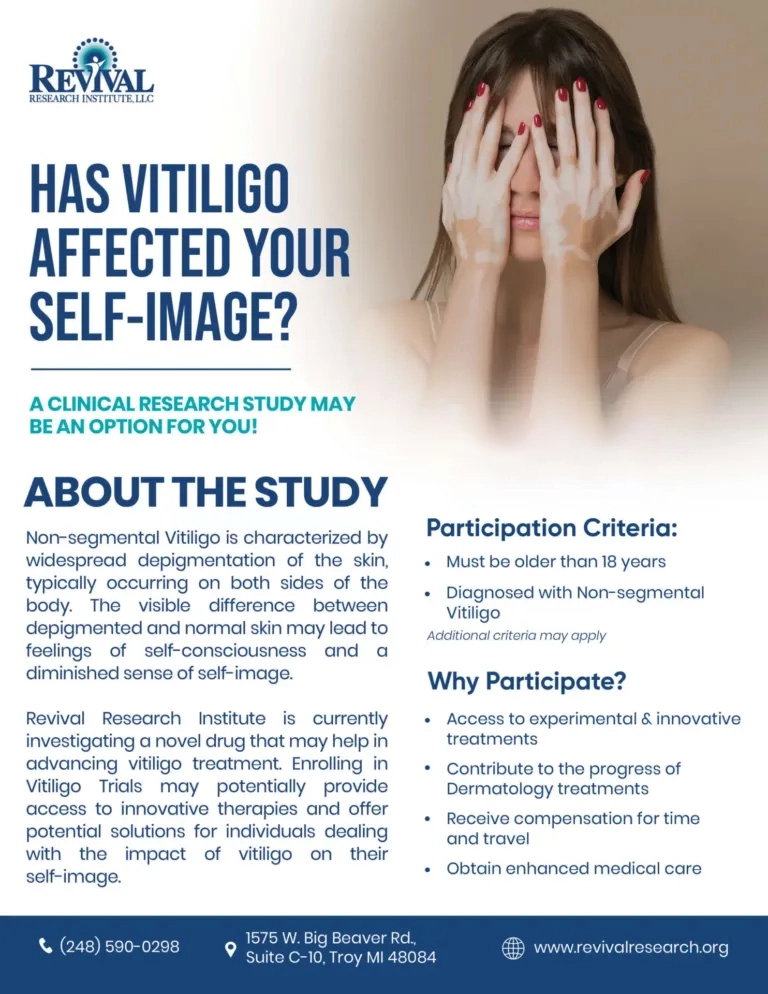
About Non‑segmental Vitiligo Clinical Trials
Living with non-segmental vitiligo can significantly impact your quality of life. The gradual loss of skin pigment, often on visible areas like the face, hands, and arms, can affect self-image, emotional well-being, and social confidence.
Revival Research Institute is conducting a clinical trial for individuals with non-segmental vitiligo. This research study is designed to evaluate the safety and effectiveness of an investigational treatment that may help slow or reverse depigmentation and improve overall skin appearance.
Non-segmental Vitiligo Clinical Trials will be held at multiple locations across the United States, including Michigan and Georgia. To determine eligibility, all participants must follow specific study procedures. Those who qualify after the screening process may be randomly assigned to receive either the study medication or a placebo as part of the clinical trial.
*All study procedures and study-related treatments, including the investigational drug, are provided at no cost, no insurance is required to participate; and participants may receive compensation for time and travel.
*To take the next step, submit the form above, and our research staff will contact you to determine if you qualify for the study. A brief discussion about your health and medical history may be required.
Get Started: What to Expect?
If you are living with non-segmental vitiligo, you may qualify for a paid clinical trial focused on potential new treatment options for vitiligo. After completing the interest form above, someone from our research team will contact you for a brief pre-screening to determine if you meet the initial eligibility criteria. If you qualify, you will be asked to review and sign an Informed Consent Form (ICF), which outlines all study procedures, potential benefits, and risks.
Following your consent, you will be invited to a screening visit at our clinical research site. During this visit, we will ask about your medical history, perform physical exams, and run lab tests to help assess your eligibility. If you meet all study requirements, you will be officially enrolled in the clinical trial.
Our research team will ensure you understand your role in the study and what participation involves. Please feel free to ask any questions before making your decision. Your involvement helps support the development of future treatment options for non‑segmental vitiligo.

Age
18 years or older

Condition
Non-segmental Vitiligo

Location
Georgia & Michigan
Facing the Challenges of Non-segmental Vitiligo?

Non-segmental Vitiligo (NSV) is a chronic skin condition characterized by the progressive loss of pigment-producing cells (melanocytes), leading to white patches on the skin. These depigmented areas commonly appear symmetrically on the face, hands, arms, feet, and body, but they can occur anywhere. In many cases, vitiligo progresses over time, expanding the affected areas. Though it is not contagious or physically painful, non-segmental vitiligo can have a profound psychosocial impact, affecting self-esteem, emotional health, and social interaction.
The exact cause of vitiligo is not fully understood, but it is believed to result from an autoimmune response in which the body mistakenly attacks its own melanocytes. Genetic susceptibility and environmental triggers may also contribute to disease onset. Despite current therapies, many individuals experience slow or incomplete repigmentation, underscoring the need for new treatment options that offer sustained results.
Vitiligo May Be Triggered By
- Autoimmune disorders (such as thyroid disease or type 1 diabetes)
- Genetic predisposition (family history of vitiligo or autoimmune conditions)
- Skin trauma (cuts, sunburn, or friction—known as the Koebner phenomenon)
- Stress or emotional events
- Chemical exposures or oxidative stress
Common Symptoms of Non-segmental Vitiligo
- Patches of skin that gradually lose pigment
- Symmetrical white patches, especially on sun-exposed areas
- Premature graying of scalp or facial hair
- Change in color of the retina or inner lining of the mouth/nose
- Areas of skin more sensitive to sunlight or prone to sunburn
Frequently Asked Questions
Answers to The Most Common Questions About Vitiligo
Living with vitiligo can be challenging, and it’s natural to have questions. We’ve answered some of the most asked questions about the condition—its symptoms, triggers, and everyday management—to help you feel more informed and supported. Looking for more guidance? Reach out to our amazing team: +1 (248) 721-9539
What is vitiligo?
Vitiligo is caused by the inadequacy of melanin, a pigment that gives skin its color and is produced by skin cells known as melanocytes.
What causes non-segmental vitiligo?
Non-segmental vitiligo is mainly caused by autoimmune triggers, in which the immune system unintentionally targets and kills melanocytes or cells that produce color.
What is the cure for non-segmental vitiligo?
Vitiligo causes white spots that are usually permanent, though there are potential treatments for depigmentation that may help minimize their appearance. Common treatment options available are steroids creams and regimentation or light therapy. Non-segmental vitiligo clinical trials can also serve as a potential treatment for depigmentation.
What are the complications of Non-Segmental Vitiligo?
Vitiligo patients may be more susceptible to:
- Distress on the social or psychological level
- Sunburns
- Sight and Hearing problems