

Looking for Solutions to Manage Diabetes?
Type 2 Diabetes Clinical Trials May Be an Option!
Type 2 diabetes is one of the most common problems faced by the US population. Approximately 38 million Americans have diabetes (which equates to every 10th individual) and 90 to 95% of these are type 2 diabetics. With such a high prevalence, this common condition can put a huge burden on the healthcare system and affect the masses. It also raises the risk of multiple health issues like myocardial infarction and stroke.
If you or someone you know has type 2 diabetes and is looking to manage their blood glucose levels, Revival Research Institute is conducting Type 2 Diabetes Clinical Trials.
Are You Eligible to Participate in the Type 2 Diabetes Clinical Trials?
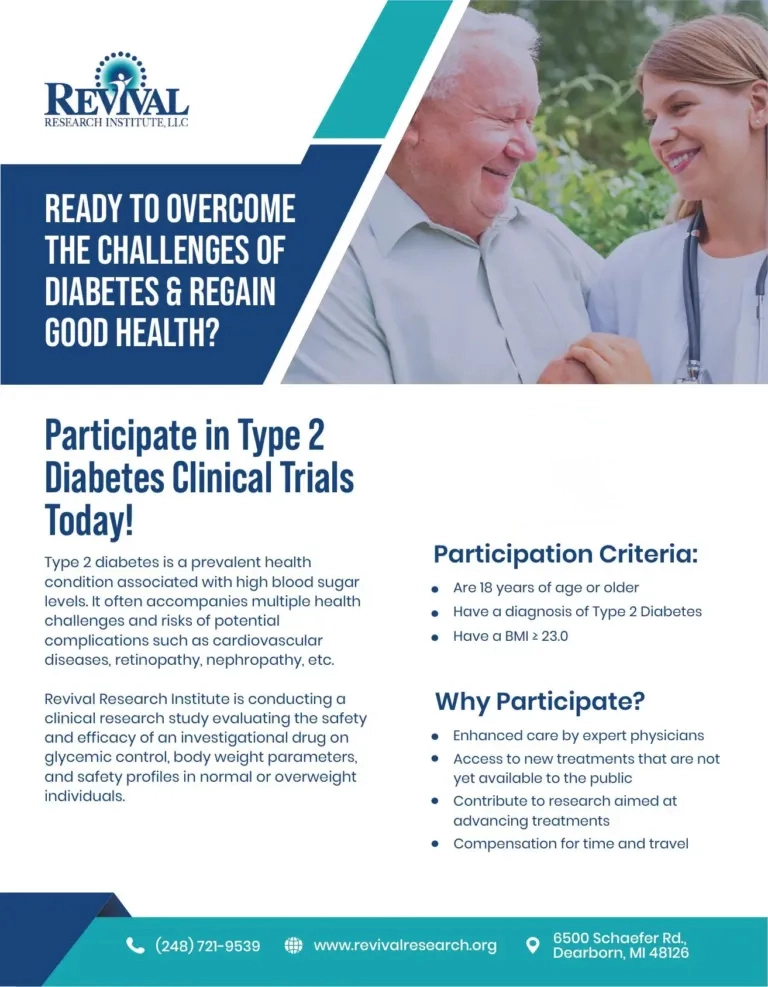
To be eligible to participate in the diabetes trial, individuals must meet the following criteria:
- Be 18 years of age or older
- Have a diagnosis of type 2 diabetes
- BMI 23 or above
*Additional criteria may apply.
*Participation in Type 2 Diabetes Clinical Trials is free of cost. To learn more or to enroll, fill out the form below and someone from the research team will contact you to discuss if you may be eligible to participate in the study.
About The Type 2 Diabetes Clinical Trials
Some individuals may find it hard to manage their blood glucose with conventional medicine, even with a healthy lifestyle. We are conducting a clinical trial for diabetics with a goal to test the safety and efficacy of a study drug.
If you are eligible to participate in the Type 2 Diabetes Clinical Trials and decide to participate, you may be asked by the study team to attend scheduled visits which may include physical examinations, blood draws, and questionnaires. A dedicated research team including doctors and nurses will monitor your health throughout the clinical trials for type 2 diabetes. Participation in the Type 2 Diabetes Clinical Trials is completely voluntary, and you may withdraw at any time for any reason.
*No insurance is required to participate. Participants will receive study-related care completely free of cost.
*To participate, fill out the form above and one of our research staff will contact you to see if you may be eligible for the study. They may ask you a few questions related to your health and medical history to see if you are eligible for a permit.
Get Started
What to Expect?
Once you fill out the form above, a member of our research team will reach out to you by phone. If you appear to meet the basic criteria, you may be invited to our clinical site to begin the screening process. During this visit, you may undergo a blood draw, a physical examination, and be asked questions about your medical history to help determine whether you’re eligible for the study.
The total timeframe of participation in the Type 2 Diabetes Clinical Trials may last for several weeks, depending on the specific goals of the study. The exact duration and all relevant details will be discussed with you during the Informed Consent process.
If you qualify and choose to participate, you may receive the study drug. Before you begin, the study team will provide thorough information about the trial, including potential risks, benefits, and what to expect from the study medication.
Throughout the trial, your health will be closely monitored by a qualified clinical research team, including physicians and nurses. We encourage you to ask any questions you may have, your understanding and comfort are important to us at every step.

Age

Condition

Location
Type 2 Diabetes: An Alarming Health Concern

Type 2 Diabetes Mellitus (T2DM) is a common medical condition that impairs how our bodies regulate glucose, resulting in elevated blood glucose levels. Over time, these elevated glucose levels can adversely affect different body systems. This can lead to potentially life-threatening complications like atherosclerosis, neuropathy, nephropathy, retinopathy, or gangrenous foot. Notably, obesity (or being overweight) is considered one of the most potent risk factors for type 2 diabetes, as it makes the body resistant to insulin. A substantial majority, around 80–90%, of individuals with T2DM are overweight or obese. Additionally, obesity has a direct impact on heart health by elevating blood pressure and cholesterol levels.
Along with these, there are multiple other effects of diabetes on the body, such as impairment of the immune system (which makes individuals more susceptible to infections) and nervous issues like diabetic peripheral neuropathy. This makes it imperative to explore alternative therapies through Type 2 Diabetes Clinical Trials.
Type 2 Diabetes May Be Influenced By
- Insulin resistance (the body’s cells stop responding effectively to insulin)
- Obesity (excess fat, especially around the abdomen, increases insulin resistance)
- Physical inactivity (lack of exercise contributes to weight gain and poor insulin sensitivity)
- Genetics & family history (family history of diabetes increases risk)
- Unhealthy diet (high intake of processed foods, sugars, and saturated fats can lead to insulin imbalance)
Common Symptoms of Type 2 Diabetes
- Increased thirst and urination (excess glucose pulls fluid from tissues, leading to dehydration)
- Fatigue (inability to use glucose for energy can result in persistent tiredness)
- Blurred vision (high blood sugar levels can affect the eyes' lenses)
- Slow-healing sores (poor circulation and immune function delay wound healing)
- Tingling or numbness in hands/feet (A result of diabetic neuropathy due to prolonged high blood sugar)
Frequently Asked Questions
Your Guide to Common Questions
We have answered some of the most asked questions about type 2 diabetes, its symptoms, triggers, and everyday management, to help you feel more informed and supported. Are you looking for more guidance? Reach out to our amazing team: +1 (248) 721-9539
What is the relationship between diabetes and cardiovascular disease?
High blood glucose from diabetes can damage nerves and blood vessels throughout the body, including the heart. This can lead to an increased prevalence of cardiovascular risk in Type 2 Diabetes.
What are some of the warning signs of diabetes?
One should see a doctor if they experience the following symptoms that may be indicative of diabetes:
- Frequent urination (especially at night)
- Increased feeling of thirst
- Weight loss without any reason
- Feeling constantly hungry
- Have blurry vision
- Numbness or tingling in the hands or feet
- Feel very tired
- Have very dry skin
If you find it difficult to manage your blood glucose levels, consider enrolling in our Type 2 Diabetes Clinical Trials.
Is obesity a major risk factor for diabetes?
Yes, obesity is considered a major risk factor for diabetes. Research has shown a strong association between obesity and the development of type 2 diabetes. Obesity can lead to insulin resistance due to the accumulation of excess fat, particularly around the body. This ultimately increases the likelihood of developing type 2 diabetes, which is the most common form of diabetes. Furthermore, obesity is often associated with other abnormalities, such as high blood pressure and high cholesterol levels, which further contribute to the development of diabetes and cardiovascular issues. Our Type 2 Diabetes Clinical Trials may potentially help individuals manage their weight along with blood sugar.
How can diabetics manage their cardiovascular risks?
Diabetics are four times more likely to have a stroke and twice as likely to suffer a fatal heart attack. People with diabetes can take several steps to manage their cardiovascular risk effectively. Here are some key strategies:
1. Control blood sugar levels: High blood sugar levels can increase the risk of cardiovascular complications. Diabetics should aim to keep their blood glucose levels within the target range advised by their healthcare provider. This typically involves regular monitoring, following a healthy diet, taking prescribed medications or insulin, and engaging in regular physical activity. You may also want to participate in Type 2 Diabetes clinical trials.
2. Adopt a healthy diet: Diabetics should focus on consuming a well-balanced diet that is low in saturated and trans fats, cholesterol, and sodium. A diet rich in fruits, vegetables, whole grains, lean proteins (such as fish, poultry, and legumes), and healthy fats (like olive oil and avocados) can help manage blood sugar levels and reduce cardiovascular risk.
3. Maintain a healthy weight: Excess weight can contribute to cardiovascular problems. Diabetics should strive to achieve and maintain a healthy body weight through a combination of a balanced diet and regular exercise.
4. Engage in regular physical activity: Regular exercise plays a crucial role in managing cardiovascular risk. Diabetics should aim for at least 150 minutes of moderate-intensity aerobic activity per week, along with strength training exercises at least twice a week. However, it’s important to consult with a healthcare provider before starting any new exercise regimen.
5. Manage blood pressure: Diabetics should monitor and control their blood pressure levels. High blood pressure can significantly increase the risk of cardiovascular complications. Lifestyle modifications, including a healthy diet, regular exercise, limited alcohol consumption, and medications prescribed by a healthcare professional, may be necessary to maintain optimal blood pressure levels.
6. Quit smoking: Smoking is extremely harmful to cardiovascular health, especially for diabetics. Quitting smoking is one of the most effective ways to reduce the risk of heart disease. Support from healthcare providers, nicotine replacement therapies, and behavioral counseling can all aid in the process of quitting smoking.
7. Regular medical check-ups: Diabetics should have regular check-ups with their healthcare providers to monitor their cardiovascular health. This may involve assessments of blood sugar levels, blood pressure, cholesterol levels, and other relevant tests. Medication adjustments or additional interventions may be recommended based on the results.
It is essential for diabetics to work closely with their healthcare team to develop an individualized plan to manage their health, as each person’s situation may vary. It is a good idea to explore all possible alternatives, such as Type 2 Diabetes Clinical Trials, before beginning a treatment plan.