

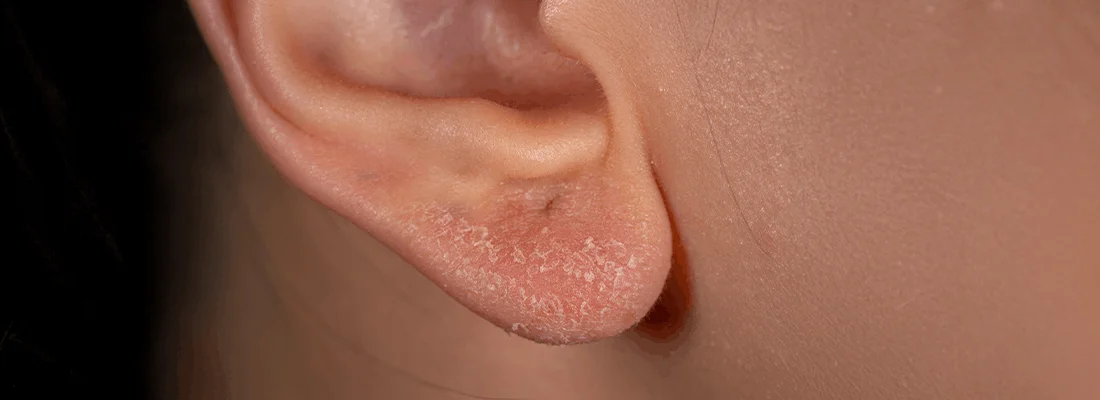
Your ears have some of the thinnest, most sensitive skin on the entire body. That tiny patch of skin is expected to protect your hearing, tolerate earrings, headphones, shampoo runoff, cold wind, and dry air. No wonder it sometimes rebels.
Centuries ago, physicians blamed itchy ears on “bad humors” drifting through the head. Today we know better. Still, when irritation flares inside or behind the ear, it can feel mysterious and oddly personal. One day it’s a faint itch. The next, it is flakes on your collar and the urge to scratch every five minutes. That is usually how eczema in ears announces itself.
This article unpacks what is really happening, why it keeps coming back, and what it takes to control it without overreacting or ignoring it.
What Is Ear Eczema and Why It Is Not Just a Skin Issue
At its core, ear eczema is a form of atopic dermatitis that targets the delicate skin of the ear canal, outer ear, and the crease behind the ear. It is not contagious. It does not mean poor hygiene. It means your skin barrier is not doing its job well.
The skin barrier is like a mortar between bricks. When that mortar weakens, moisture escapes and irritants sneak in. That leads to dryness, redness, flakes, and the intense itch that makes you want to go in with a cotton bud, which usually makes things worse.
Clinically, this is often referred to as ear eczema, and you may also see it described as eczema in ears and behind the ear when both areas are involved. The patch that sits where the ear meets the scalp is especially vulnerable because it traps sweat, shampoo residue, and friction from glasses.
How Common Is It, Really
Eczema in general is everywhere. Around 15 to 30 percent of children and 2 to 10 percent of adults live with some form of it. Your ears are not exempt. If you have asthma, allergic rhinitis, or a family history of eczema, your risk jumps. That is why eczema in ears often shows up alongside other allergic conditions.
Where Exactly Does It Appear
People are often surprised by the range of places it can strike.
- Outer ear or pinna, including the lobes
- Ear canal, where itching can feel deep and impossible to reach
- Crease behind the ear, a hotspot for moisture and friction
- The skin strip between the ear and the face
When the flare is intense, the skin can crack or ooze a yellowish fluid. In the ear canal, swelling and debris can even muffle hearing or cause ringing.
Symptoms at a Glance
Here is how it usually presents. These bullet points make it easier to spot patterns instead of guessing.
- Persistent itching, often worse at night
- Dry, flaky skin that sheds onto pillows or collars
- Red, pink, or darker discolored patches depending on skin tone
- Tiny bumps that feel rough to the touch
- Thickened or leathery skin over time
- Crusting or weeping if scratched repeatedly
- Mild swelling that makes earrings or earbuds uncomfortable
That cluster of symptoms is what doctors mean when they diagnose ear eczema treatment pathways.
What Actually Triggers Flares
There is no single villain. Instead, think of triggers as a crowded room all talking at once. For people with eczema in ears, the most common drivers fall into three buckets.
1. Allergic reactions:
This is classic contact dermatitis. Your immune system mistakes harmless substances for threats.
- Nickel, cobalt, or copper in earrings
- Hair sprays, gels, or fragranced shampoos
- Cosmetics that migrate toward the ear
- Earbuds, headphones, or even your phone
- Environmental allergens like pollen or dust mites
2. Barrier breakdown from dryness:
Known medically as asteatotic eczema, this often hits adults over 60.
- Cold winter air with low humidity
- Over washing with hot water
- Harsh soaps or alcohol-based cleansers
- Rough fabrics like wool brushing the ears
3. Oily-skin related inflammation:
Seborrheic dermatitis loves oil-rich areas like the scalp and ears.
- Flaking that looks greasy rather than powdery
- Redness around the ear folds and hairline
- Often overlaps with dandruff
When these factors pile up, eczema behind ear and in the canal is almost inevitable.
Is It the Same as Psoriasis
They look similar. They behave differently. Psoriasis forms thick plaques with a silvery scale and usually does not itch as aggressively. Ear eczema is itch-dominant and more reactive to daily irritants. It is also common for people, especially kids, to have both.
How Doctors Diagnose It
Most of the time, diagnosis is visual.
- Inspection of the outer ear and behind the ear
- Otoscope exam to see inside the canal
- Questions about itching patterns and family history
If the picture is muddy, they may add:
- Allergy patch testing
- Blood work to rule out other rashes
- Skin biopsy in stubborn or atypical cases
Relief Tips You Can Start Today
These steps are boring. They are also what keep people in remission.
- Switch to fragrance-free, dye-free hair and skin products
- Keep showers lukewarm and under 15 minutes
- Pat ears dry instead of rubbing
- Apply thick creams or ointments, not lotions, at least twice daily
- Use products with ceramides to repair the skin barrier
- Avoid nickel earrings or coat the posts with clear nail polish
- Wear cotton hats in winter instead of wool
- Run a humidifier when indoor air is dry
- Take antihistamines if itching wrecks your sleep
That daily routine is the backbone of managing eczema rash behind ear and in the canal.
When Over-the-counter Is Not Enough
Hydrocortisone creams can reduce redness and itch in mild flares. For deeper or persistent inflammation, clinicians may prescribe:
- Medium to high potency steroid creams for short bursts
- Steroid ear drops if the canal is involved
- Topical immunomodulators that quiet the immune response without thinning skin
- In stubborn cases, phototherapy using controlled UVB light
The decision depends on how aggressive the flare is and how often it comes back. Again, the tradeoff is effectiveness versus long-term safety.
Petroleum Jelly & Similar Ointments
Plain petroleum jelly is boring, cheap, and surprisingly effective. It locks in moisture and shields the skin from bacteria and fungi. Apply it gently with clean hands or a cotton swab to the outer ear. This is often part of a long-term plan for people dealing with eczema in ears.
Building a Personal Flare-prevention Plan
Think of your plan as a three-layer defense system.
1. Daily skin protection:
This is the foundation.
- Apply thick moisturizer or ointment morning and night, even when there is no rash
- Focus on the crease behind the ear and the ear lobes
- Avoid cotton buds inside the canal unless instructed by a clinician
- Keep nails short to minimize damage from unconscious scratching
- Rinse hair products thoroughly so residue does not pool near the ears
2. Trigger avoidance:
This is where lifestyle decisions come into play.
- Choose hypoallergenic earrings or coat posts with a barrier layer
- Switch to over-ear headphones if earbuds irritate the canal
- Avoid letting hair sprays or perfumes drift toward the ears
- Protect ears in cold or windy weather with breathable cotton hats
- Replace wool scarves with softer fabrics
3. Early-intervention routine:
Waiting until symptoms are severe is a recipe for prolonged flares.
- At the first sign of itching, increase moisturizing frequency
- Use mild anti-inflammatory creams exactly as prescribed, not longer
- Avoid self-escalating to stronger products without medical advice
Final Thought
Your ears do a lot of work every day. They carry glasses, jewelry, headphones, and the weight of daily exposure to wind, sun, and pollution. Treating their skin with the same care you give your face is not indulgent. It is a prevention. In the long run, the smallest choices you make each morning decide whether irritation becomes an occasional inconvenience or a constant companion.