

Living with Atherosclerotic Cardiovascular Disease and Elevated hsCRP?
Clinical Trials May Help Explore Potential Treatment Options
Atherosclerotic Cardiovascular Disease (ASCVD) occurs when plaque accumulates in the arteries, narrowing them and reducing blood flow to the heart, brain, and limbs. It includes coronary artery disease, prior heart attack, ischemic stroke, and peripheral artery disease. As plaque builds, it may cause chest pain, shortness of breath, leg pain when walking, and speech difficulty. These symptoms can limit daily activity and add worry for patients and their families.
Inflammation also contributes to the progression of ASCVD, and high-sensitivity C-reactive protein (hsCRP) is a blood marker used to measure it. Elevated hsCRP reflects ongoing inflammation and may be associated with a higher risk of future heart attack or stroke, even when cholesterol and blood pressure are managed.
If you are living with ASCVD and elevated hsCRP, Revival Research Institute is conducting an ASCVD research study in Michigan to evaluate an investigational treatment approach for adults living with this condition.
Are You Eligible to Participate?
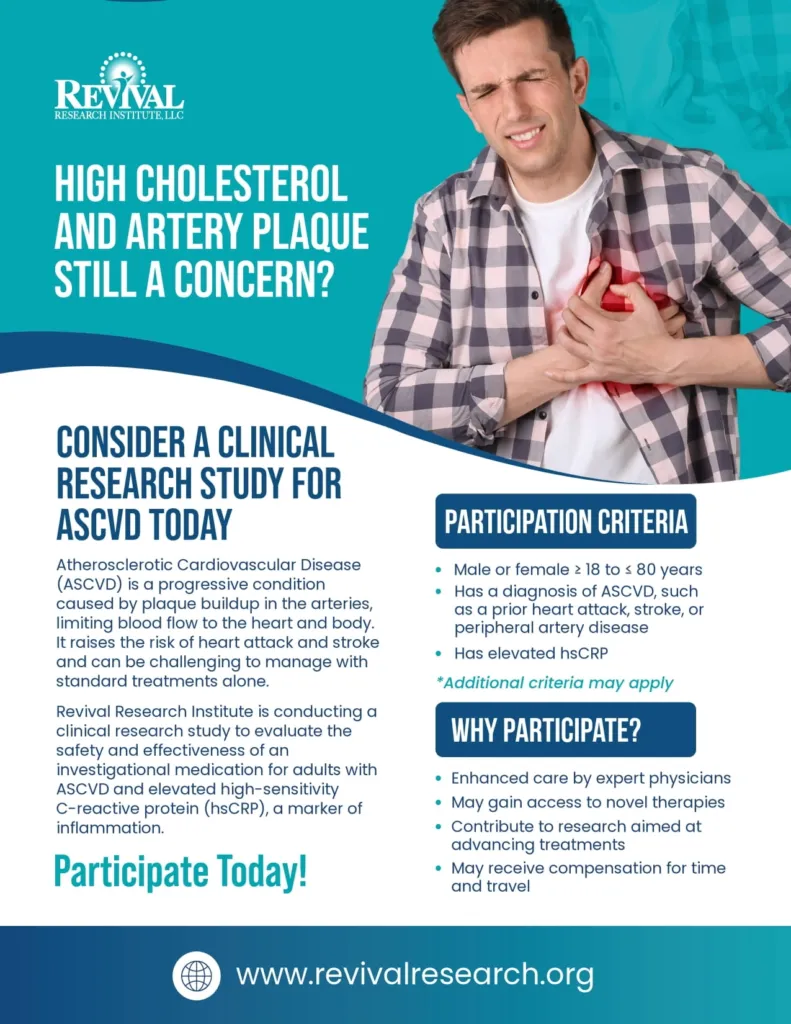
- Be male or female ≥ 18 to ≤ 80 years
- Has a diagnosis of ASCVD, such as a prior heart attack, stroke, or peripheral artery disease
- Have elevated hsCRP level
About ASCVD and Elevated hsCRP Clinical Trials
Living with ASCVD can require lifelong medical management and regular monitoring. Atherosclerosis develops gradually as plaque accumulates within the arterial walls, and inflammation within these plaques may contribute to their growth and instability. Many people continue to face cardiovascular risk despite following their prescribed treatment plans.
Revival Research Institute is conducting a clinical trial for adults with Atherosclerotic Cardiovascular Disease and elevated hsCRP. This C-reactive protein cardiovascular clinical research is designed to evaluate the safety and efficacy of an investigational treatment being studied for people with ASCVD and elevated inflammation.
*All study-related procedures and study treatments are provided at no cost to eligible participants. No insurance is required to participate.
*To take the next step, submit the form above, and our research staff will contact you to determine if you qualify. A brief discussion about your health and medical history may be required.
Get Started
What to Expect?
If you are living with Atherosclerotic Cardiovascular Disease and elevated hsCRP, you may qualify for ASCVD and elevated hsCRP clinical trials exploring potential treatment options. After completing the interest form above, a member of our research team will contact you for a brief pre-screening discussion.
If you qualify, you will be asked to review and sign an Informed Consent Form (ICF). This document explains the study procedures, potential risks, possible benefits, and participant responsibilities before you decide whether to participate.
Once consent is provided, you may be invited to one of Revival Research Institute’s study sites for additional screening evaluations. These assessments may include a physical examination, review of medical history, vital signs, laboratory testing, electrocardiogram (ECG), and other evaluations required by the study protocol.
Participants who meet all study requirements may be enrolled in the study. Our team will ensure that you fully understand your participation and what to expect throughout the study duration. You are encouraged to ask questions at any time.

Age

Condition

Location
Atherosclerotic Cardiovascular Disease: A Chronic Inflammatory Artery Condition

How ASCVD and Elevated hsCRP May Affect the Body
- Plaque buildup within the arteries
- Narrowing and stiffening of blood vessels
- Reduced blood flow to the heart, brain, or limbs
- Ongoing vascular inflammation
- Increased risk of plaque rupture and blood clots
Common Features Associated with ASCVD
- Chest pain or pressure (angina)
- Shortness of breath
- Unusual fatigue with physical activity
- Leg pain or cramping when walking
- Temporary weakness, numbness, or speech difficulty (transient ischemic attack)
- History of heart attack, stroke, or arterial procedures
Frequently Asked Questions (FAQs)
Your Guide to ASCVD and Elevated hsCRP Clinical Trials
Got questions about Atherosclerotic Cardiovascular Disease, elevated hsCRP, or clinical research? You’re not alone.
We’ve compiled answers to some of the most common questions about ASCVD and elevated hsCRP, including its causes, symptoms, diagnosis, treatment, and clinical trial participation. Still have questions? Contact our research team for more information. Call us at +1 (248) 721-9539 — we’ll be happy to assist you.