

Had a Heart Attack Recently?
You May Qualify for This Clinical Trial!
Every year, around 1.5 million Americans experience an Acute Myocardial Infarction (AMI), commonly known as a heart attack. It happens when blood flow to the heart muscle is blocked, depriving it of oxygen and causing permanent damage.
Despite advanced treatments, people who suffer a heart attack remain at high risk for additional cardiac events. At Revival Research Institute, we are conducting clinical trials to evaluate new investigational therapies designed to improve outcomes, reduce complications, and help people live healthier lives after an acute myocardial infarction.
You may be eligible if you:
- Are 18 years or older
- Have recently suffered a heart attack (within the past 2–3 weeks)
- Are at high risk of heart failure or other complications following an heart attack (myocardial infarction)
*Additional Criteria may apply.
*The Acute Myocardial Infarction Clinical Trial is free of cost to both you and your insurance provider. You will receive a stipend for every visit to the site you complete if you qualify and decide to participate in the research study. And all participants receive study-related care from doctors & health care professionals, free of cost.
*If you decide to be a part of the research study or would like more information, please fill the form so that we can see if you may qualify. Someone from the research staff will give you a call to confirm eligibility. Keep in mind that your participation is entirely voluntary. If you do decide to take part in the study, you have the right to withdraw consent at any time.
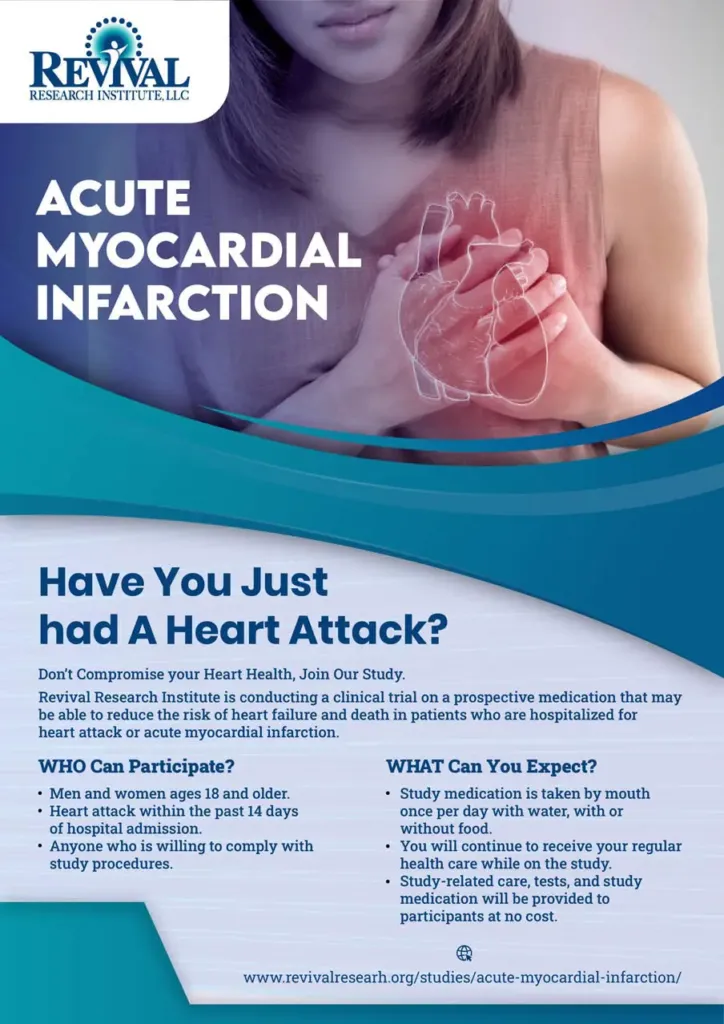
Living with Heart Attack Risks? See If You’re Eligible for Our Study
This Acute Myocardial Infarction Clinical Trial is evaluating an investigational oral medication, combined with the standard of care, to see if it can help prevent further heart damage.
All study-related care will be provided free of cost, and insurance is not required.
*The study drug procedures are free of cost for all the participants. If you decide to participate in the study, you will receive study-related care from experienced healthcare staff including doctors, cardiologists, and nurses.
What to Expect
Once you agree to participate in the study, the research team will ask you to sign an Informed Consent Form (ICF). This document has all the information you may need concerning the myocardial Infarction clinical trials. The study doctor and the study team will provide guidance about the study-related procedures and treatment throughout the clinical trial. We highly encourage all our participants to ask as many questions as they would like before and throughout their participation.
*Participation in the clinical research trial is free of cost to you and your health insurance. Patient health is the top priority in our clinical trial. If the participant suffers from any adverse event, the participant’s information along with the treatment will be disclosed to the study doctor to ensure the participant’s well-being.

Age

Condition

Location
About Acute Myocardial Infarction (Heart Attack)

An Acute Myocardial Infarction (AMI), commonly known as a heart attack, occurs when blood flow to part of the heart muscle becomes blocked due to a clot or narrowed coronary artery. This blockage prevents oxygen-rich blood from reaching the heart, leading to chest pain, pressure, shortness of breath, and other severe symptoms. If not treated promptly, an AMI can cause permanent damage to the heart muscle and increase the risk of heart failure.
Risk Factors for Heart Attack (AMI)
- High blood pressure
- High cholesterol
- Diabetes
- Smoking
- Excessive alcohol consumption
- Sedentary lifestyle
- Stress and mental health conditions
- Unhealthy diet (high in saturated fats)
- Menopause in women
Warning Signs of a Heart Attack
- Chest pain or pressure (often radiating to arms, neck, jaw, or back)
- Shortness of breath
- Sudden onset of fatigue, nausea, or dizziness
- Rapid or irregular pulse
- Cold sweats
Frequently Asked Questions
Got Questions About Acute Myocardial Infarction?
We’ve compiled answers to some of the most common questions about this condition—what it is, why it happens, how it is treated, and what living with a heart attack can mean for you. Still have questions? Call us at +1 (248) 721-9539, and we’ll be happy to assist you.
What is acute myocardial infarction?
Acute myocardial infarction is also known as a heart attack. This occurs when the blood supply to the heart is suddenly blocked due to a buildup of cholesterol or plaque. This could cause the heart muscle to die, either a few cells of the heart or an entire section.
When does an acute myocardial infarction (AMI) or heart attack occur?
It occurs when one or more areas of the heart do not receive enough blood supply which cuts off the oxygen to that part of the heart. There is usually a blood clot that forms in the area where there is a buildup in the blood vessels. When the blood clot breaks off or ruptures, heart attacks or acute myocardial infarction occurs.
Are there any risks in participating in the Myocardial Infarction Study?
Every clinical trial has its risks and benefits. If the medication is effective, it may reduce some of the symptoms of your condition. However, the medication might not improve your condition, or it may remain the same for the duration of the clinical trial. All the risks and benefits of participating in the clinical trials will be explained to you during the informed consent process. Participants will be monitored for any risks or side effects during the course of the trial.
What is the location of the Myocardial Infarction Clinical Trial?
The study site will be located within a 50-mile radius of you. The location of the site of this study is Sherman and McKinney, Texas.
Will I need to pay to participate in the clinical trial?
Participation in the clinical trial is free of cost to both you and your health insurance. If you decide to participate and qualify for the research study, you might receive a stipend for every visit completed. The study doctor will discuss this with you during the Informed Consent Process.