

Is Nerve Pain Disrupting Your Life?
Diabetic Peripheral Neuropathy Clinical Trials May Be an Option!
Diabetic peripheral neuropathy (DPN) is one of the most common and debilitating complications of diabetes. It occurs when high blood glucose levels over time lead to damage of the peripheral nerves, typically starting in the feet and hands. Individuals with DPN may experience a range of symptoms including numbness, tingling, burning sensations, or sharp, shooting pains. These symptoms often worsen at night and can severely impact a person’s ability to walk, sleep, or perform daily tasks.
In more advanced cases, DPN can lead to muscle weakness, balance issues, and even foot ulcers or infections due to decreased sensation. Left unmanaged, it can significantly affect mobility, independence, emotional well-being, and overall quality of life.
If you or someone you know has diabetic peripheral neuropathy, Revival Research Institute is conducting Diabetic Peripheral Neuropathy Clinical Trials, exploring potential new treatment options.
Are You Eligible to Participate?
To qualify for the Diabetic Peripheral Neuropathy Clinical Trials, participants must:
- Be male or female, 18 years or older
- Have been diagnosed with type 1 or type 2 diabetes
- Have pain in the extremities due to DPN for at least 6 months
*Additional criteria may apply.
Participation in the Diabetic Peripheral Neuropathy Clinical Trials is free of cost. To learn more or enroll, fill out the form below. A member of our research team will contact you to discuss your potential eligibility in the study.
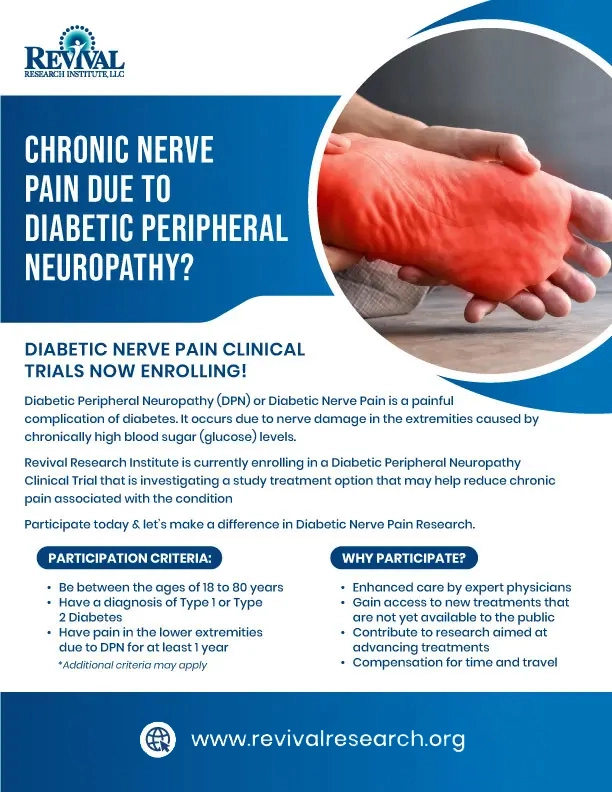
About Diabetic Peripheral Neuropathy (DPN) Clinical Trials
Living with DPN can make everyday tasks challenging. From persistent pain and sensitivity to difficulty walking or sleeping, this condition impacts more than just your physical health; it can take a toll on your emotional well-being.
Revival Research Institute is conducting a clinical trial for individuals with diabetic peripheral neuropathy. This study is designed to evaluate the safety and efficacy of an investigational treatment that may help manage DPN symptoms.
Clinical trials will be conducted at multiple locations across the United States, including Michigan. To qualify, participants must complete a screening process and comply with all study procedures. Those who meet eligibility criteria and are selected for the study will receive either the investigational treatment or a placebo.
All study-related procedures and treatments—including the study treatments—are provided at no cost. No insurance is required to participate, and eligible participants may receive compensation for time and travel.
To take the next step, complete the form above. A member from our research team will contact you to determine if you qualify. A brief discussion about your health and medical history may be required.
Get Started
What to Expect?
If you are living with diabetic peripheral neuropathy, you may qualify for a paid clinical trial exploring new treatment options. After completing the interest form above, a member of our research team will contact you for a brief pre-screening to determine if you meet the initial eligibility criteria.
If you qualify, you’ll be asked to review and sign an Informed Consent Form (ICF), which outlines all study procedures, potential benefits, and possible risks. Once consent is given, you will be invited to one of Revival’s research sites for a screening visit. During this visit, we will review your medical history, conduct physical exams, and perform lab tests to further assess your eligibility. If you meet all study requirements, you will be officially enrolled in the Diabetic Peripheral Neuropathy Clinical Trial.
Our team is committed to ensuring you fully understand your role in the study and what to expect throughout. Please feel free to ask any questions before deciding to participate. Your involvement helps advance future treatment options for diabetic peripheral neuropathy.

Age

Condition

Location
Diabetic Peripheral Neuropathy: A Chronic Nerve Condition

Diabetic peripheral neuropathy (DPN) is a long-term, progressive condition that results from damage to the peripheral nerves caused by persistently high blood sugar levels in individuals with diabetes. Over time, elevated glucose levels impair the function of nerves, particularly in the lower extremities. Symptoms often develop gradually, beginning with a subtle tingling or numbness in the toes or soles of the feet.
As the condition progresses, these sensations may intensify and spread upward toward the legs, and in some cases, even affect the hands and arms. People with DPN frequently report sharp, burning pain, increased sensitivity to touch, muscle cramping or weakness, and a diminished sense of temperature or vibration. Loss of coordination and balance is also common, increasing the risk of falls and injuries.
Diabetic Peripheral Neuropathy May Be Triggered By
- Long-term high blood sugar levels (hyperglycemia)
- Nerve inflammation or injury
- Smoking and alcohol use
- Poor circulation
- High blood pressure or cholesterol
Common Symptoms of Diabetic Peripheral Neuropathy
- Burning, tingling, or sharp pain in the feet or hands
- Numbness or reduced ability to feel pain or temperature
- Muscle weakness or coordination issues
- Sensitivity to touch, even from socks or bedsheets
Frequently Asked Questions
Your Guide to Diabetic Peripheral Neuropathy
Got questions about diabetic nerve pain? You’re not alone.
We’ve compiled answers to some of the most common questions about the condition—what causes it, how it’s treated, and what daily life with DPN can look like. Still can’t find what you’re looking for? Our team is here to help. Reach out to us on +1 (248) 721-9539, and we’ll be happy to assist you.
What is Diabetic Peripheral Neuropathy (DPN)?
DPN is a type of nerve damage that occurs in people with diabetes, most commonly affecting the feet and legs. It’s caused by prolonged exposure to high blood sugar and can lead to pain, numbness, and loss of sensation.
What is the treatment for diabetic peripheral neuropathy?
DPN treatments often include blood sugar management, pain relievers, antidepressants, anticonvulsants, and physical therapy. While these options can help manage symptoms, they often don’t reverse the nerve damage.
Revival Research Institute is conducting clinical trials to test new investigational treatments that may better manage or reduce DPN symptoms.
Is diabetic peripheral neuropathy contagious?
No, DPN is not contagious. It is a medical condition linked to diabetes and cannot be transmitted from person to person.
What is the cost of participating in a research study?
There’s no cost to participating in our DPN clinical trials, as we cover all the expenses ourselves, including travel and participation costs.